New York City famously champions individuality, entrepreneurship, and grit—especially when it comes to artistic- and self-expression. It generously offers a playground to do so within. The walls, the subways, the avenues, the architecture are arguably all canvases to express these qualities. But what do individuality and authorship mean in a city like New York, when hundreds of thousands of people are also creating, recreating, and expressing themselves in these ways?
Photography has long complicated this relationship between individuality and repetition. Images circulate, evolve, and return in new forms: reprinted, reposted, or reframed.
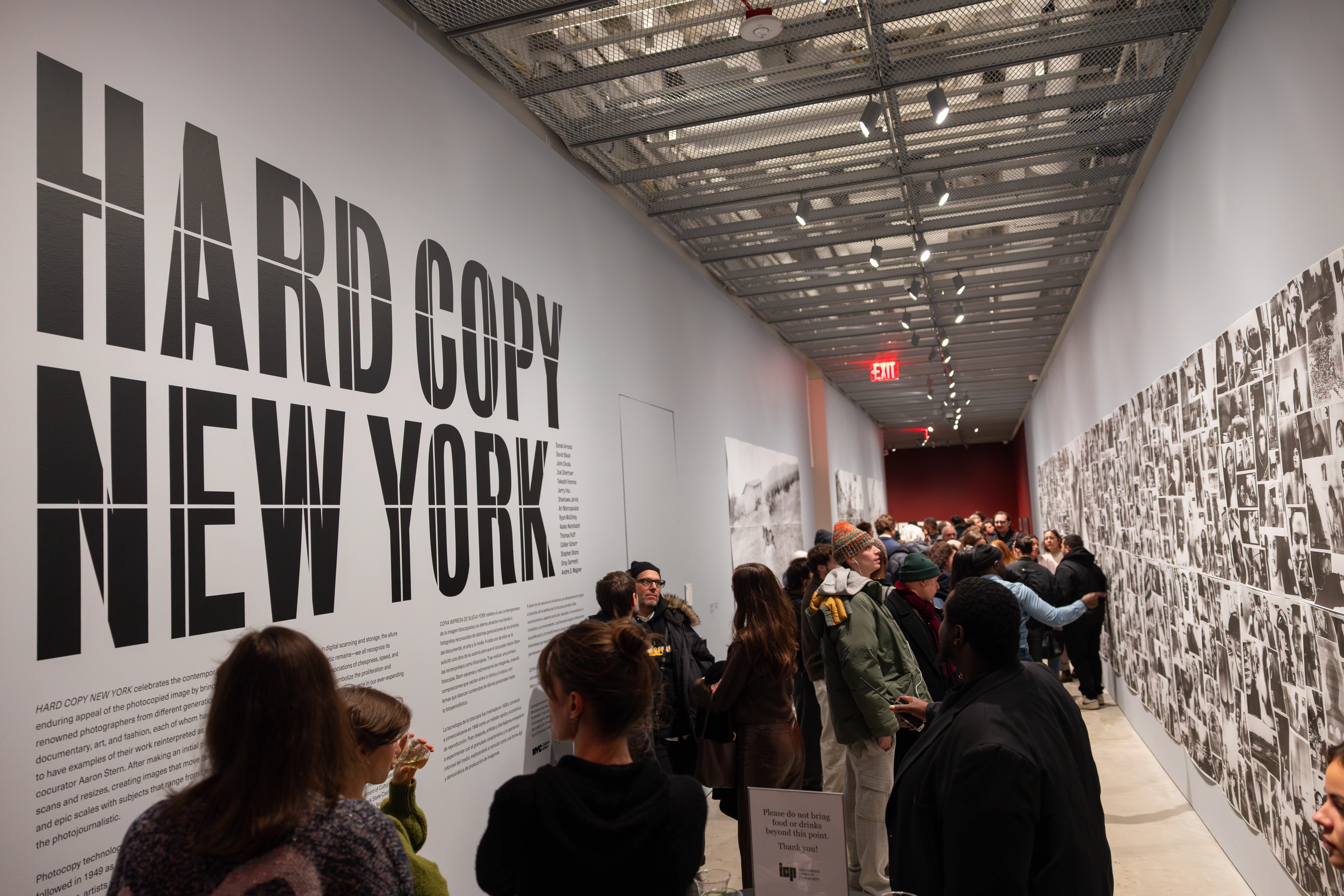
In our current moment when digital images proliferate, fewer physical copies of images are made or exhibited. In HARD COPY NEW YORK, an ICP winter 2026 exhibition exploring the contemporary use of the photocopied image, curators David Campany and Aaron Stern aimed to reassert photography's inherent power: an ability to offer a profound, democratic, and tangible experience. Each photocopy is an interpretation of the original art pieces—one that calls into question process, ownership, and the commercialization of art.
HARD COPY NEW YORK was a group show of 15 artists whose visual styles traversed abstraction, documentary, fashion, and conceptual photography. An expanded iteration of Aaron Stern’s ongoing project exploring the contemporary use of the photocopied image, tapping into the repertoire of talent such as Takashi Homma, Daniel Arnold, Collier Schorr, Ryan McGinley, Stephen Shore, and Gray Sorrenti, among others. It’s the first time this show—and Stern’s curation—were being seen in this context of a museum exhibition.
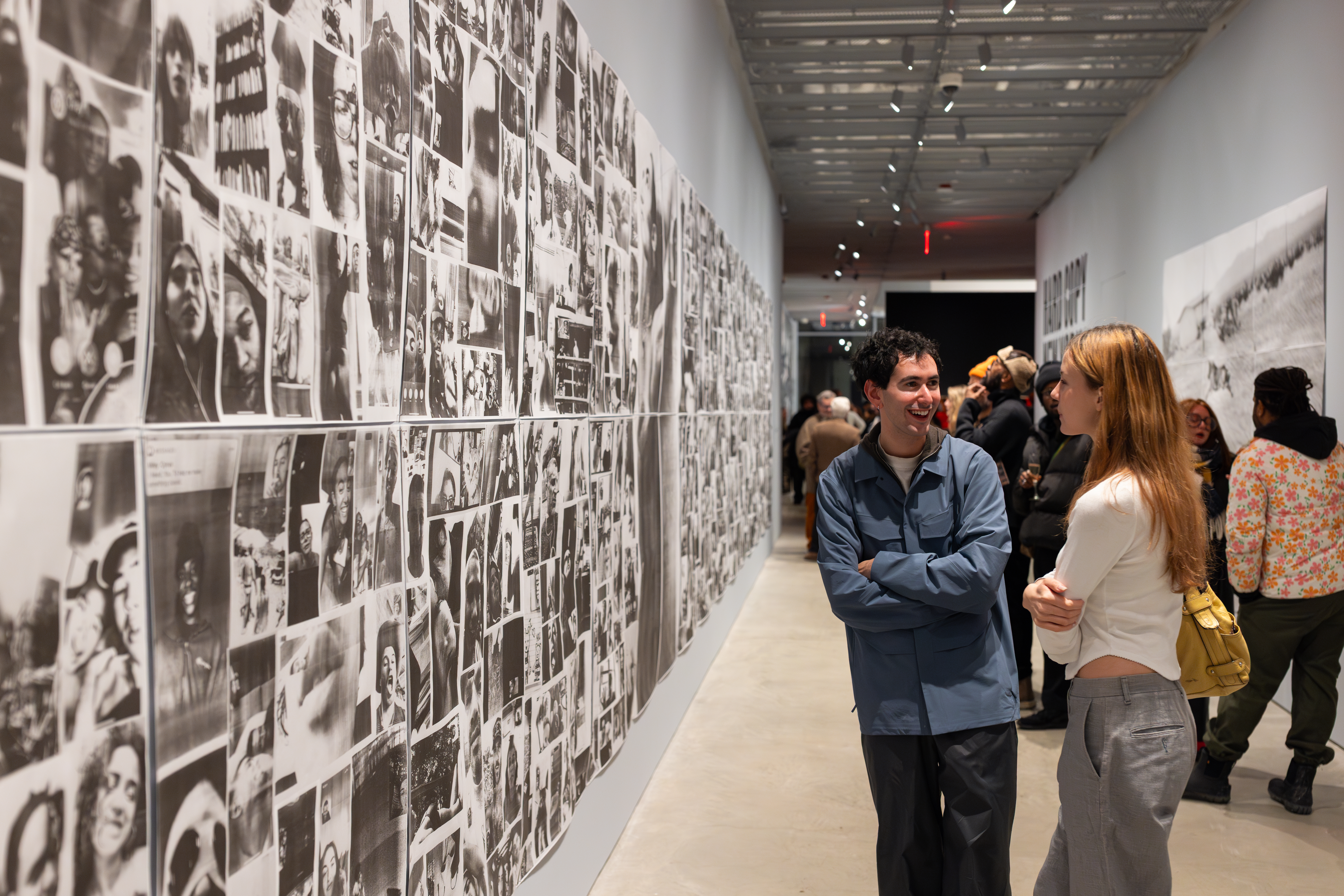
Gray Sorrenti’s intentional FaceTime portraits line a long corridor in the galleries. Credit: Jenna Bascom
Photocopying gave Stern the license to show work that feels more physical, immediate, and open to imperfection. One example is Gray Sorrenti’s intentional FaceTime Portraits, taken over 10 years (and photocopied), which covered an entire wall of the exhibition. Through this process, a seemingly everyday perspective is resurrected through a different treatment and context.
“I like that it allows for mistakes,” Stern said. “I can print it super-large for very little money comparatively. It's a little off register. It breaks down hierarchies between genres, emerging and established artists, and between what is maybe seen as important and what just hits you.”
This also meant curating for ICP’s space, which Stern remarked added gravity and a sense of permanence, even if the show was temporary. Documentary photographer Daniel Arnold, who started his career alongside Stern, argued there’s something that binds the group together in a big photographic conversation in which they all participate.
“The show represents unexpected corners of worlds intersecting,” said Arnold. “And if you think of people in our little social media echo chambers, there’s a decent joke to be made about us covering the walls of a museum in photocopies. In this city, the desire for individuality is rubbed in your face. While at the same time you discover that everything you do ends up being a copy of something or it ends up being copied.”
Arnold’s remark also gestures toward a broader shift in how images circulate today. Museums were once the primary sites where audiences encountered photographs. Now images often appear first on social media feeds at a rapid rate, making them less accessible than before. HARD COPY made that circulation visible in the most tactile way, translating the rhythms of reposting and remixing into a physical form.
Photocopying may seem like an outdated technology in the age of digital reproduction. Yet its imperfections–grain, contrast shifts, the occasional misalignment–chronicle the physical life of images. In a city built on reinvention, originality rarely exists in isolation. Images are borrowed, reframed, or repeated. Sometimes deliberately, sometimes unconsciously. HARD COPY embraced that reality. By turning reproduction itself into a curatorial method, the exhibition suggests that copying is not the opposite of creativity, but one of its conditions.