

It is a bright Friday afternoon, and sunlight floods Spandita Malik’s studio space high above Lower Manhattan. The windows at 4 World Trade Center frame the harbor—Statue of Liberty in the distance, ferries moving past Ellis Island—while inside, Malik pours a cup of strong ginger tea that jolts the senses awake. The light is extraordinary here, she says, the kind that shifts minute by minute. Some days it fills the entire room; by evening, the glass reflects the photographs back onto themselves, so that the women in them seem to quietly populate the studio after dark.
Malik is currently an artist-in-residence at Silver Art Projects, a program that gives artists access to studio space within the building. It’s the largest studio she has ever had, and she laughs when she says it has changed the scale of her thinking. During the winter months, she often spends entire days here. Embroidering, writing, experimenting for projects with swatches or new materials. The cozy blue couch, and the massive red carpet it’s placed on are prime locations, come day or night. Sometimes welcoming friends and collaborators who stop by.
The images hanging on the walls belong to a long-running body of work that has come to define Malik’s practice: Jāḷī, a collaborative photographic project created with women across India over the past six years. The work grew out of an earlier series, Nārī, but has since expanded into something more complex—an evolving network of portraits that explore power, authorship, and the politics of representation.
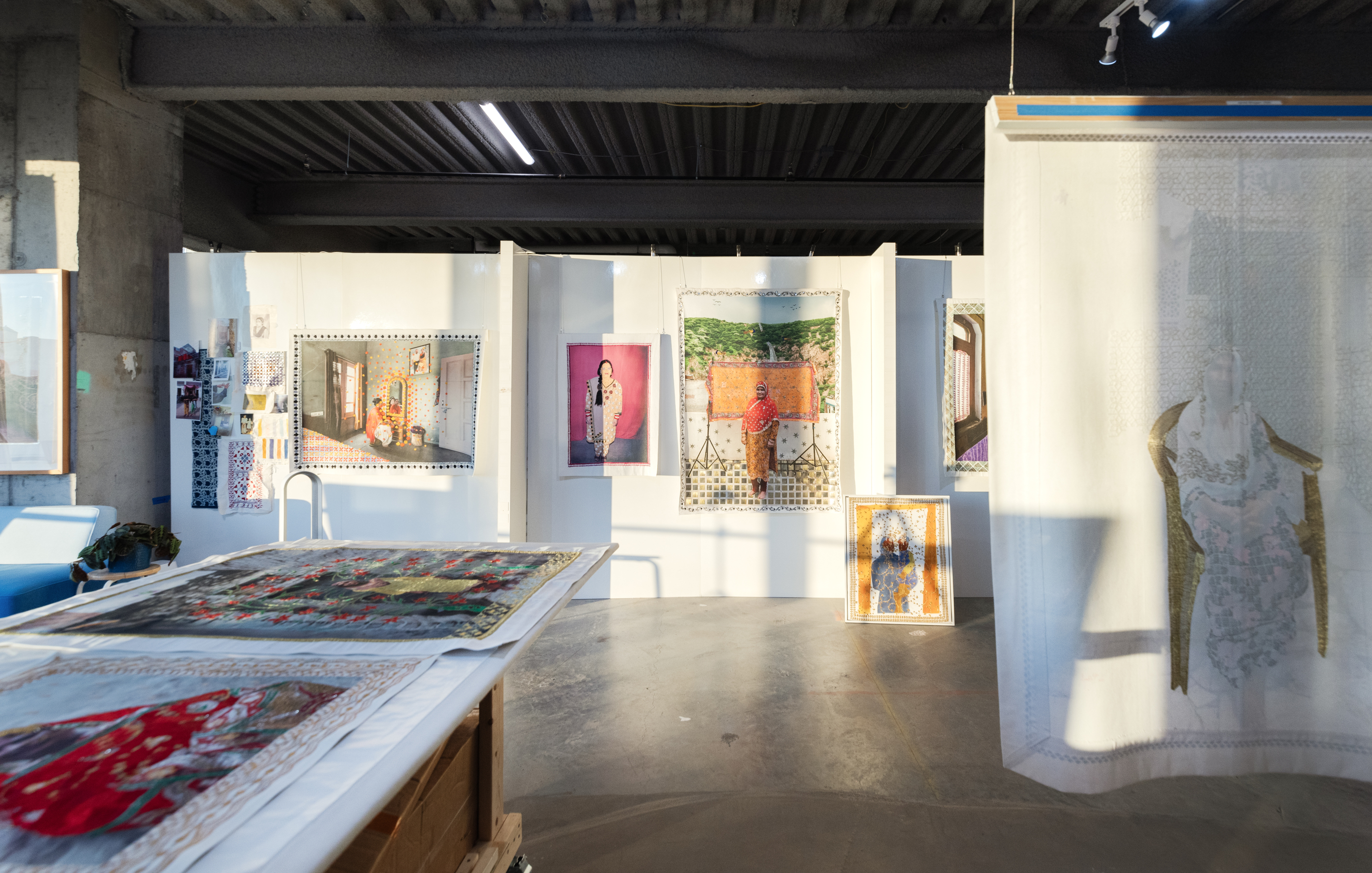
The images hanging on the walls belong to a long-running body of work that has come to define Malik’s practice: Jāḷī,
“My work focuses on women’s rights and gender-based violence,” Malik explains. “But I’m also very interested in how photography itself holds power, how the act of making an image can shape the narrative around someone’s life.”
That question led her to reconsider the history of documentary photography in South Asia. For decades, Malik notes, images of poverty in India circulated globally through a distinctly Western gaze: high-contrast, visually striking photographs that often aestheticized hardship. As a young photographer, she once aspired to make images like those. Later, studying photography more deeply at Parsons School of Design, she began to question the power dynamics embedded in them.
Jāḷī emerged as a response.
“I’m also very interested in how photography itself holds power, how the act of making an image can shape the narrative around someone’s life.”
Since 2019, Malik has worked with women across several regions of India, many of whom she first encountered through organizations supporting survivors of domestic abuse and sexual violence. She photographs each participant in her own environment—often inside a bedroom or living space carefully arranged by the subject herself. The images include small details of daily life such as family photographs or objects placed on shelves. These traces of domestic space become part of the portrait.
Then comes the most crucial step. Malik sends the printed photograph back to the woman and invites her to embroider directly onto it, with no instructions.
“They can do whatever they want,” Malik says. “They can hide things, reveal things, or change the narrative completely. I think there's a lot of power in the way that they hide their faces.”
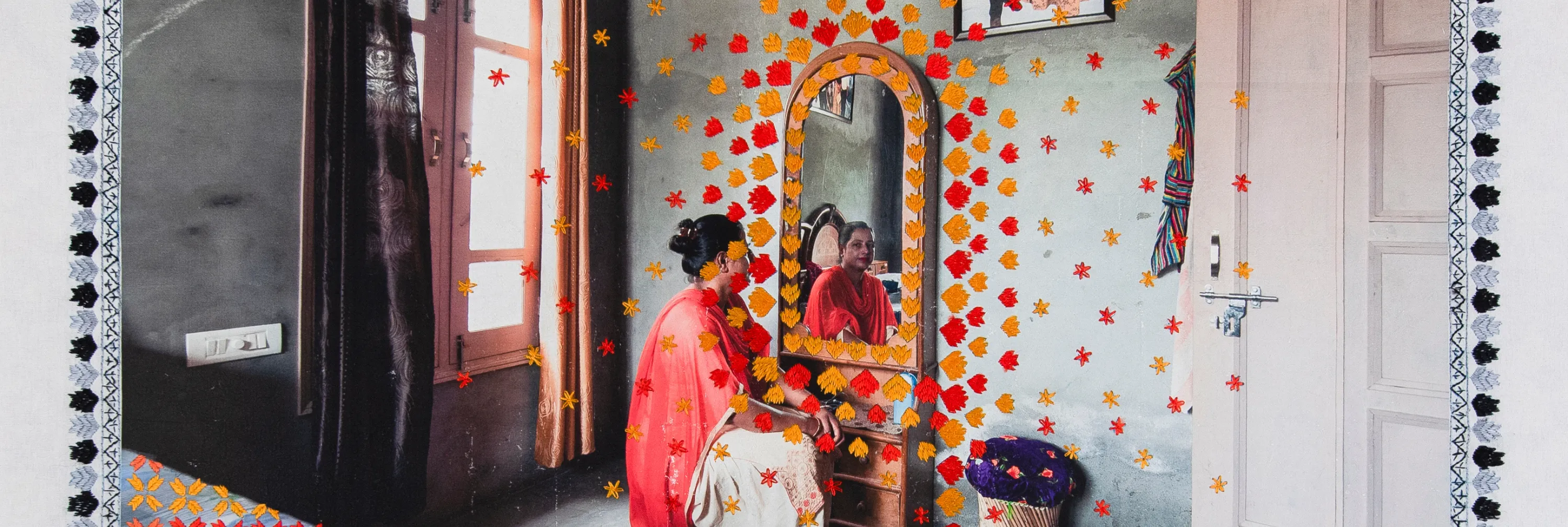
Some participants stitch over their own faces, obscuring their identity. Others emphasize objects or symbols in the room—peacocks, flowers, waterfalls, or similar motifs of protection or joy. In some portraits, entire sections of the photograph disappear beneath dense embroidery, leaving only fragments of the original image visible. The process transforms the photograph from a fixed document into something more fluid: a shared act of authorship.
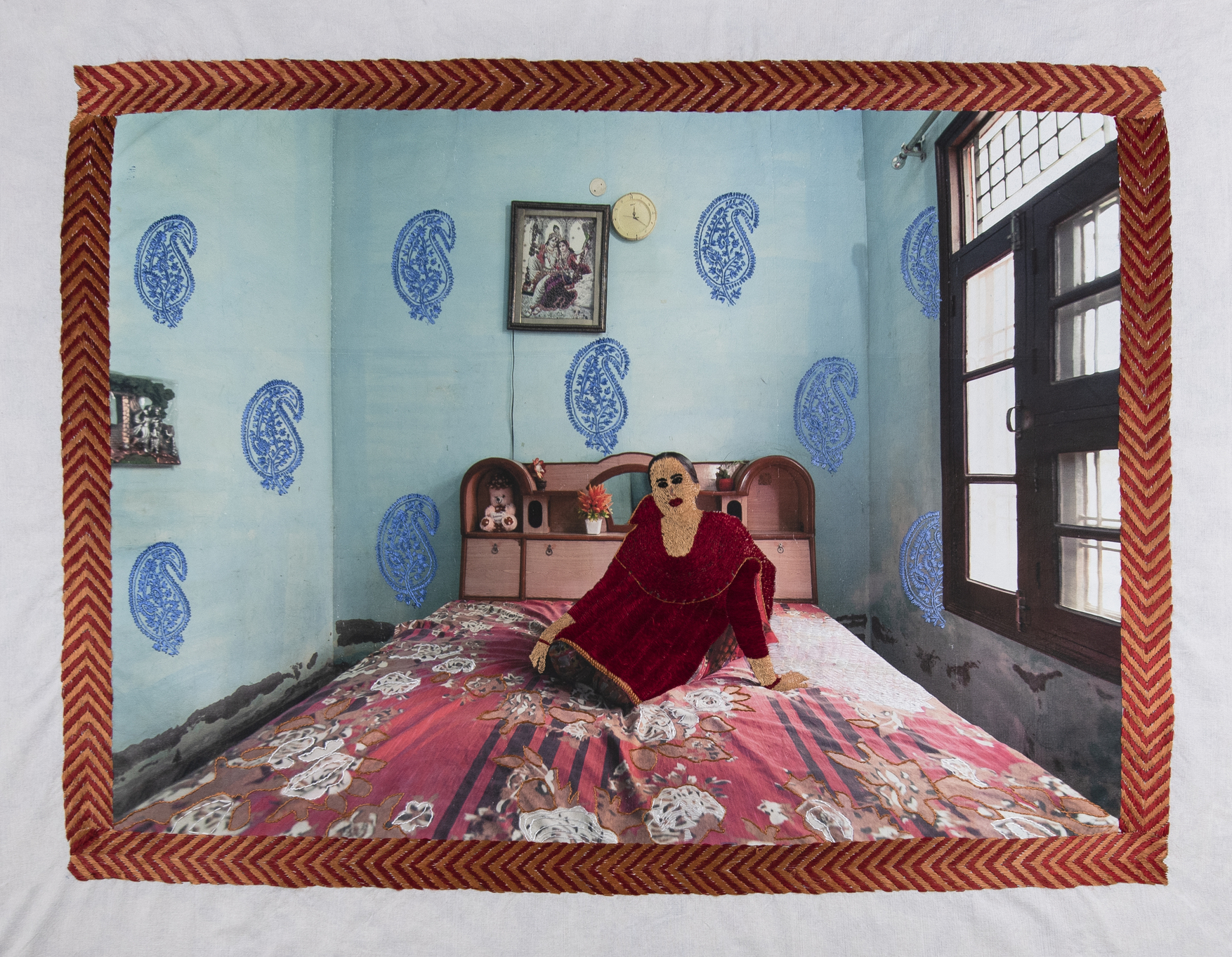
Meena II unique photographic transfer print on khaddar fabric with phulkari silk thread embroidery, 39 x 52.5 inches, 2023. Courtesy the artist © Spandita Malik 2023
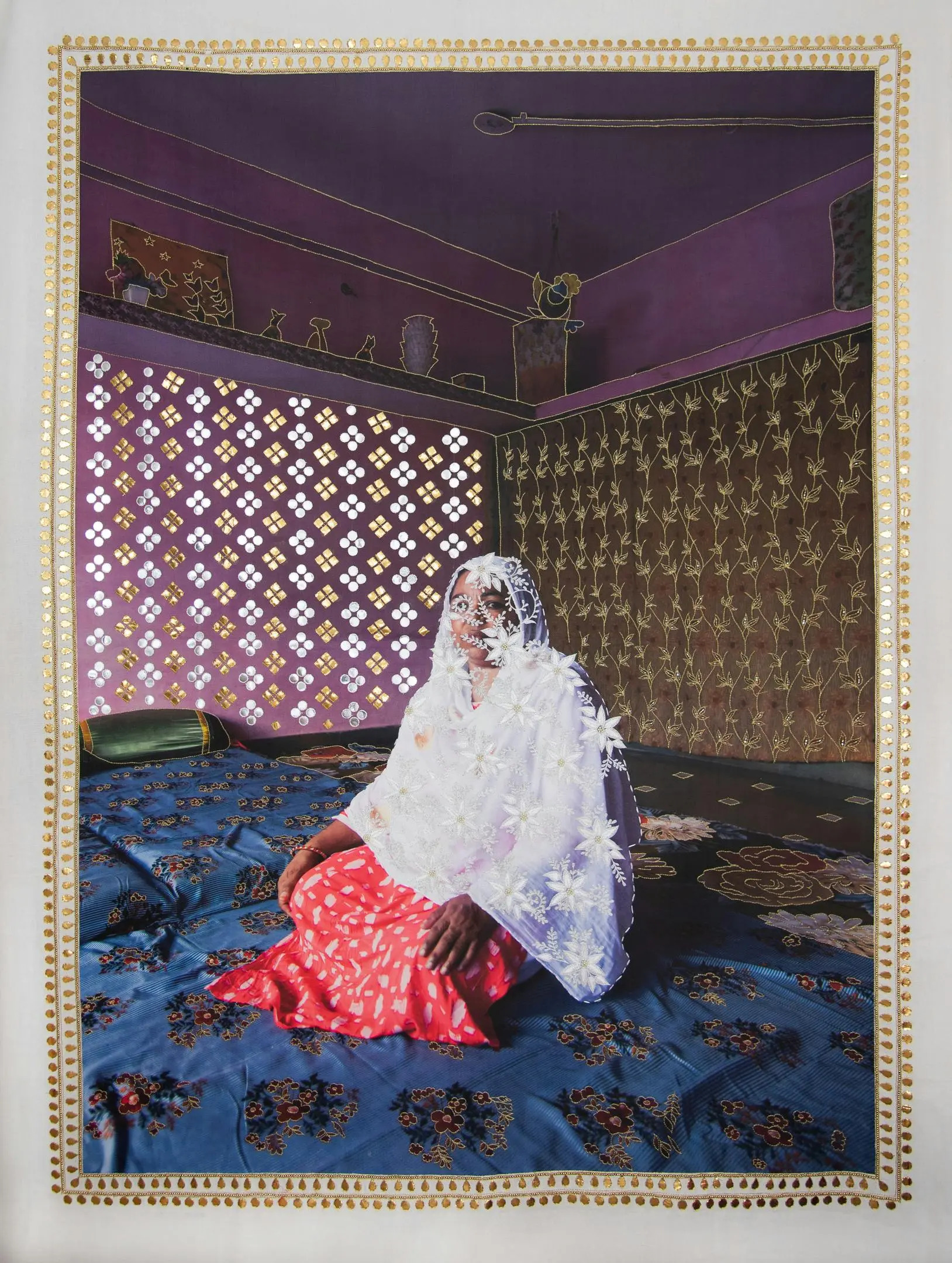
Noshad Bee, 2023. Photographic transfer print on khadi fabric, zardozi embroidery, Unique 64 1/2 × 47 1/2 inches, Courtesy of Spandita Malik Art and Spandita Malik
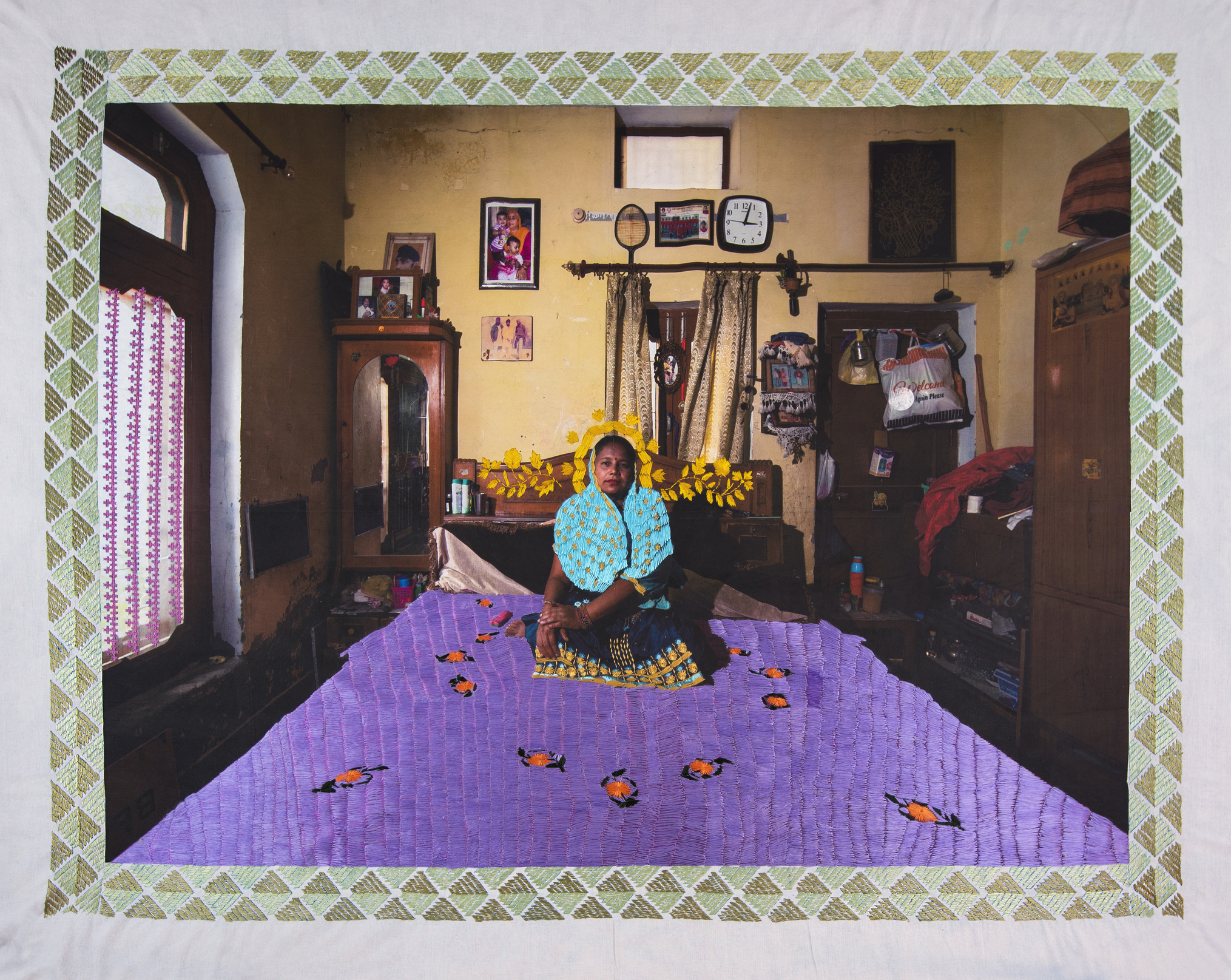
Charanjit, unique photographic transfer print on khaddar fabric with phulkari silk thread embroidery, 50 x 66 inches, 2023. Courtesy the artist © Spandita Malik 2023
In one portrait Malik shows me, the subject has surrounded her own figure with intricate yellow stitching. The motifs draw from phulkari, a traditional Punjabi embroidery technique rich with symbolic language. The effect is both ornamental and protective—a shimmering shield woven across the image.
When the work was exhibited at Kemper Museum, in Kansas City, Malik recalls a group of school children passed through the gallery. One of them pointed excitedly at the photographs and shouted, “I want to go into the room where all the queens are.” Malik smiles when she tells the story. “That’s how I see them now too,” she says.
Across the studio, works-in-progress and material experiments spread across tables. Nearby lies a framed embroidery made by her grandmother nearly seventy years ago, one of Malik’s most treasured possessions. Its gold thread glints softly in the afternoon light. Also present is a work Malik created as part of a commission for The New York Times.
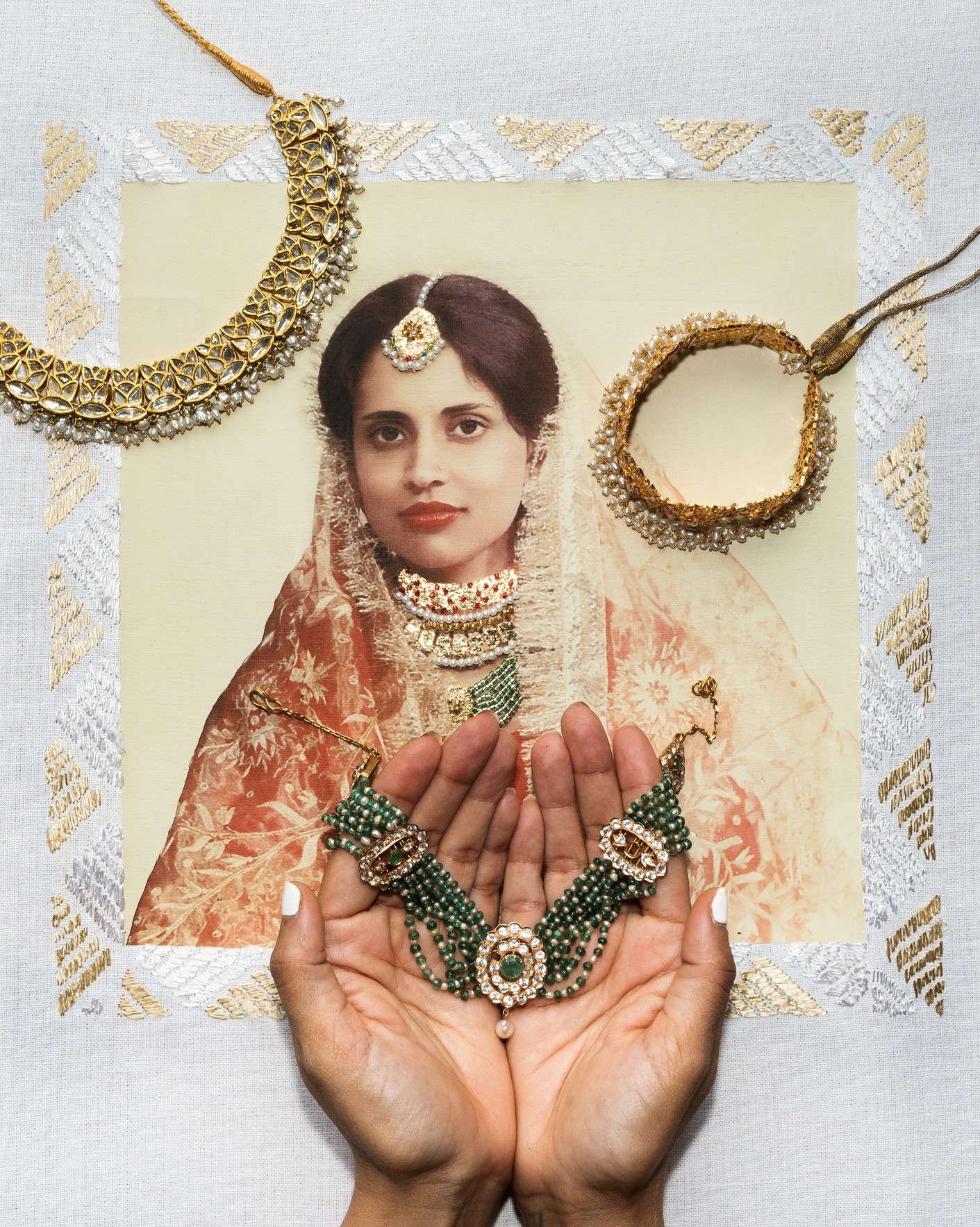
Malik's commissioned work for the New York Times
The piece is a quiet reminder that embroidery, for Malik, is not only a technique but an inheritance. Within Jāḷī, that inheritance becomes something collective. Each portrait is the result of collaboration, negotiation, and trust—an image that belongs not solely to the photographer, but also to the woman who reshapes it with her own hands.
And this year, Malik has received funding for a project which will allow her to help this community of women launch their own collective. She says one can think of it as a company in which the women are all equal shareholders.
“It's almost like a full circle moment,” says Malik, “where the work is now finally being able to create ground level change.”
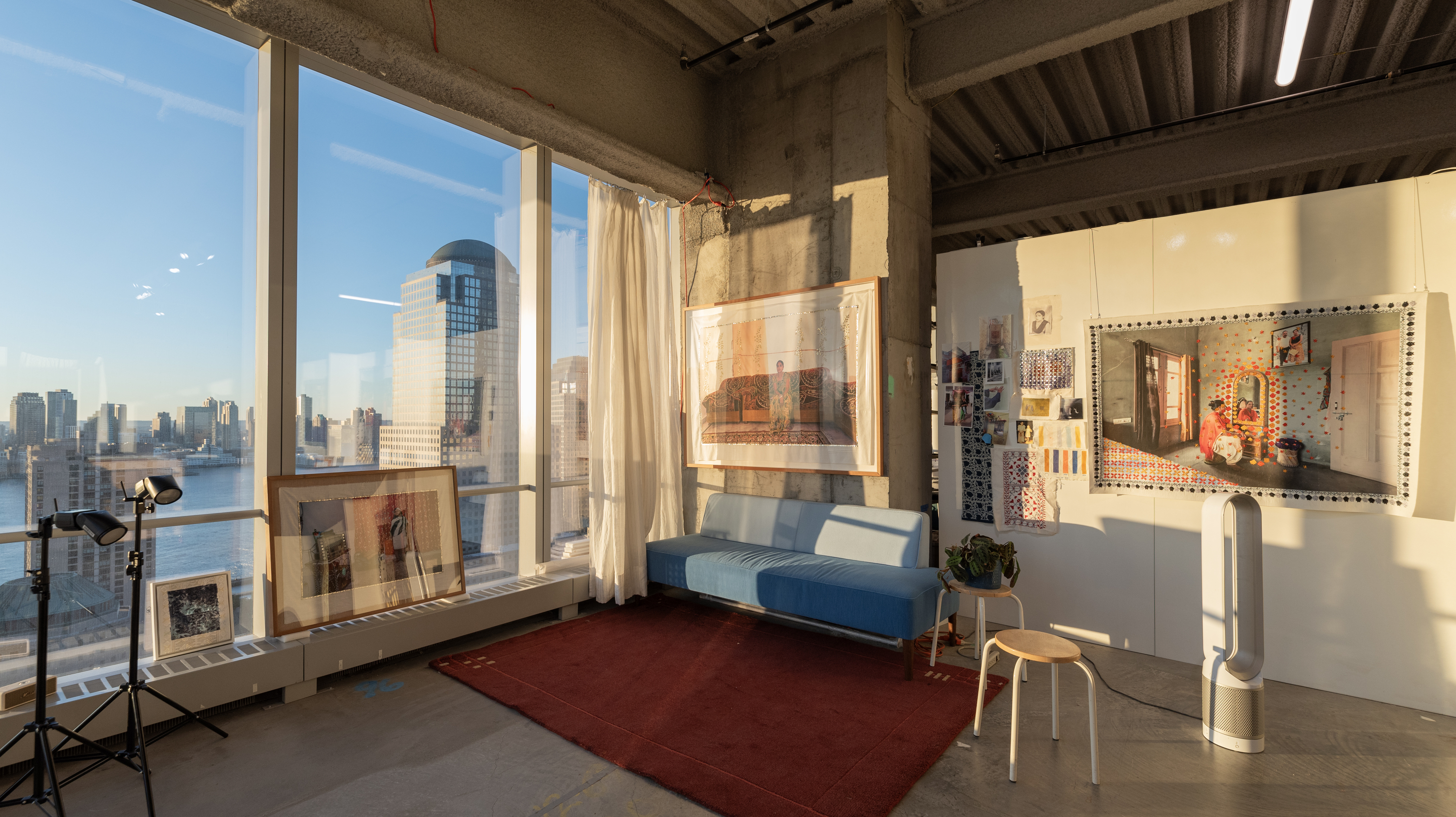
As the sun dips lower over the harbor, the golden hour light coming into the studio becomes magical. Malik looks out toward the water, then back at the photographs covering the walls.
“When the sun goes down,” she says, “all the works reflect in the windows. I see all the women in the reflections, and it feels like I’m never alone in the studio.”