
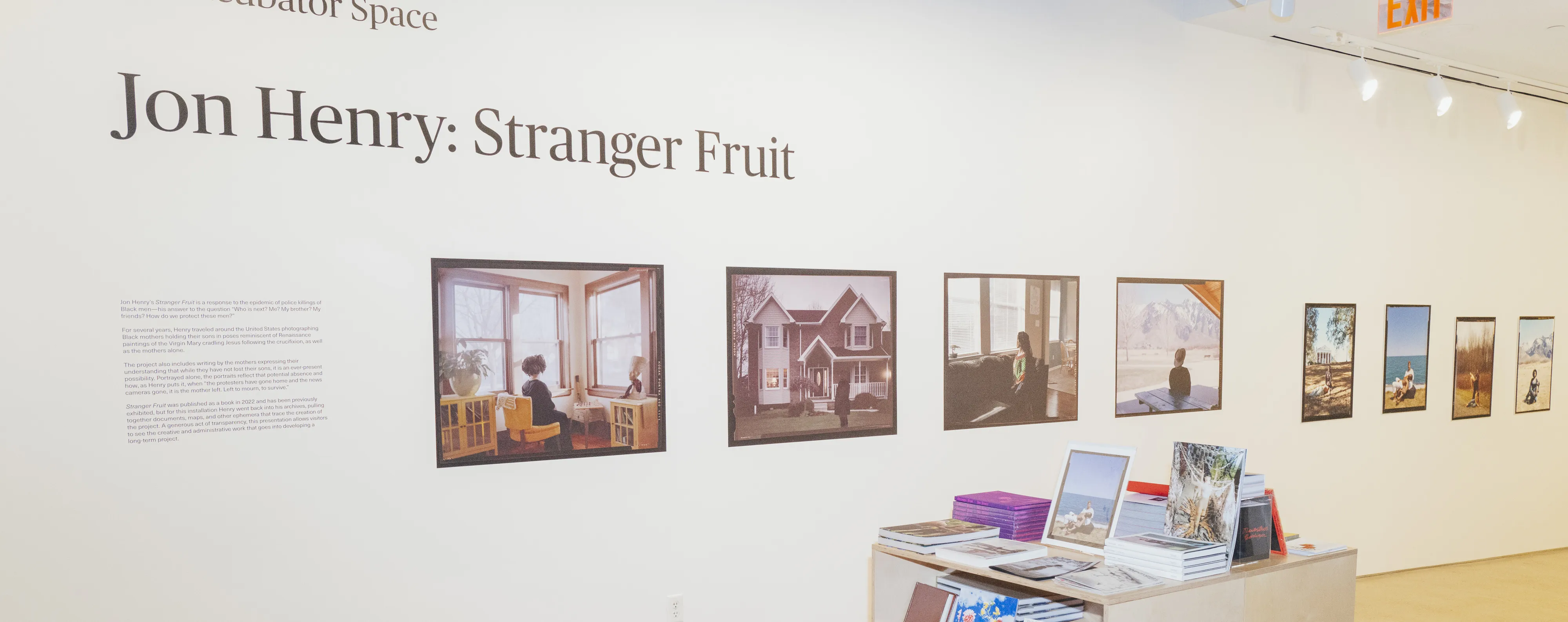
For eight years, photographer Jon Henry travelled across the United States, creating portraits of African American mothers and sons rooted in the visual language of Michelangelo's Pietà. Stranger Fruit—now on view in ICP’s Incubator Space through January 2026—traces a national landscape shaped by grief, resilience, and generations of families confronting the ongoing reality of police violence.
ICP: Tell me a little bit about Stranger Fruit, your exhibition on display at ICP’s Incubator Space
Jon Henry: I've been working on Stranger Fruit for quite a long time, probably 8 years of making images. And a longer time for research and development. The project started in 2014, as a response to the murders of African American men due to police violence.
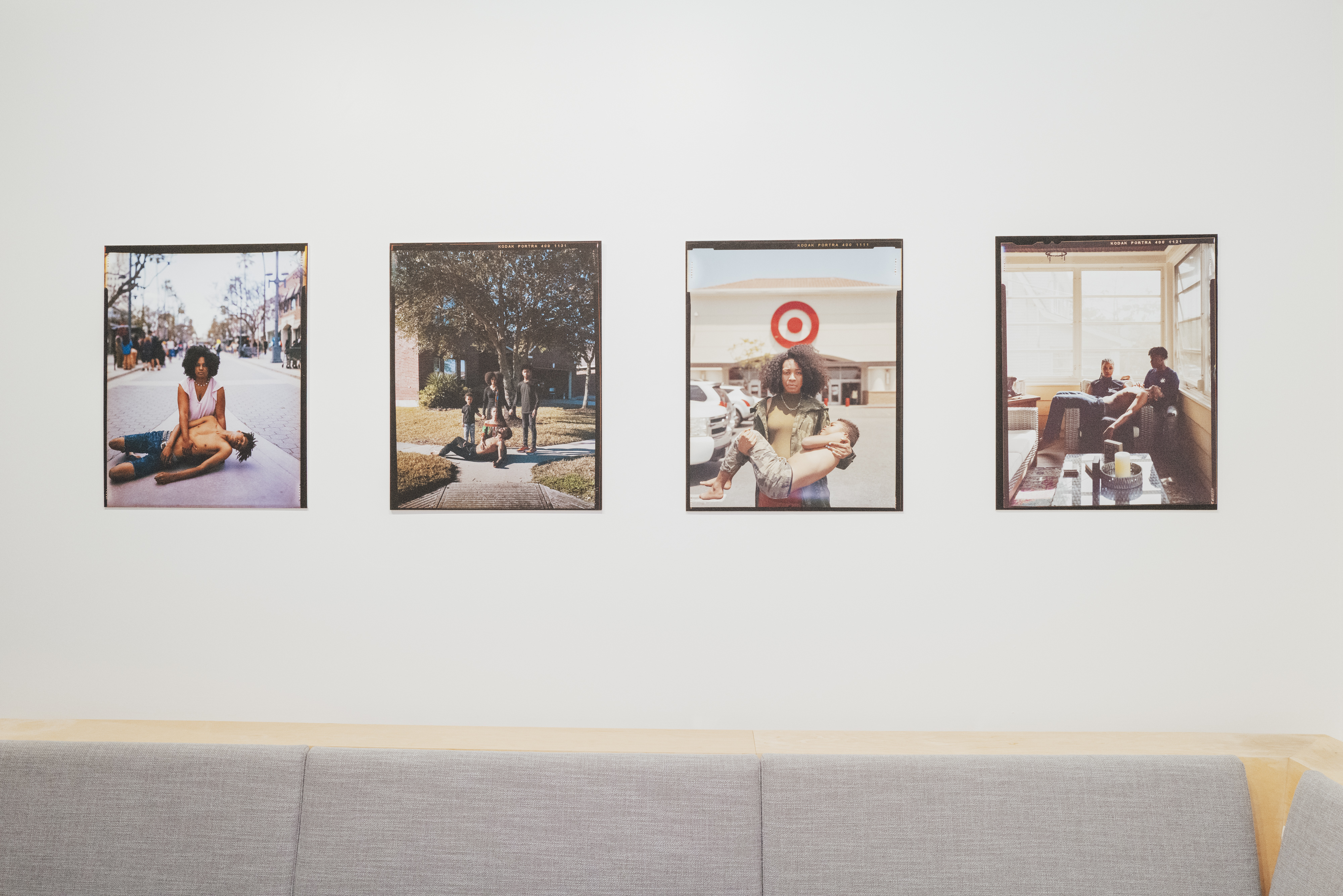
And I used the Pietà—Michelangelo's signature sculpture—as the vehicle to tell the story, photographing African American mothers and sons throughout the country.
ICP: Can you tell me how the project came together?
JH: The idea for the project really began in 2006 with the killing of Sean Bell, a young man who was murdered by the police the night before his wedding in Jamaica, Queens.
That was one of those moments that really stayed with me and had an impact on me. I remember the trial and the cops getting away with no charges, even though obviously there was no weapon found. There was no wrongdoing.
And a year later, one of my good friends was getting married. And at his bachelor party in the middle of New Jersey, all I could think of was: “What if this was happening to him? What if this was happening to us?” Then I started thinking about Sean and his family, his mother. And that's kind of where the idea for the project started. But the project didn’t start till 2014, when I started making images.
ICP: How did you land on photography as your medium?
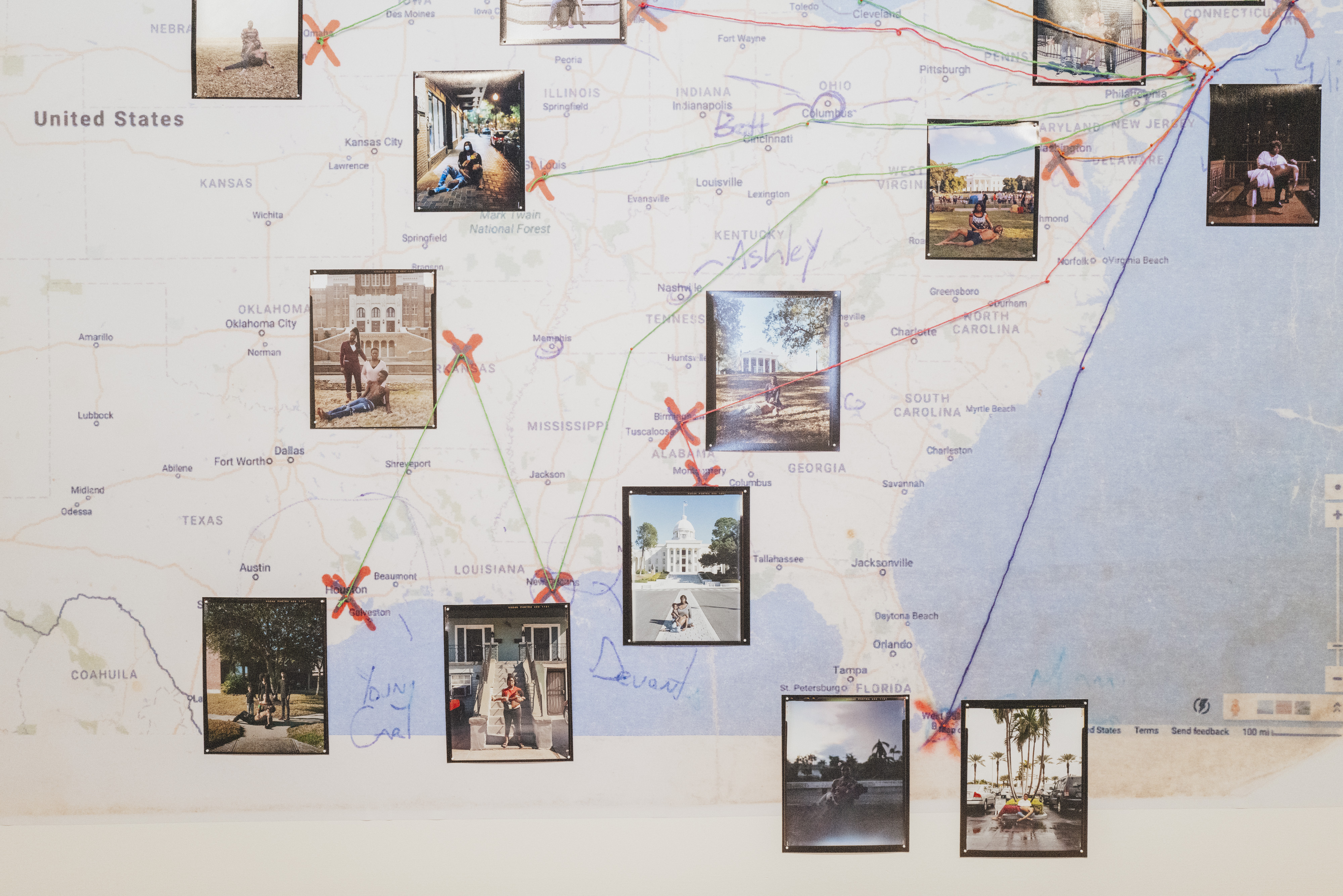
JH: It was just something that was at the back of my mind. But at the time I wasn’t making photos. So, when I went to photo school in 2010, you know, I started photographing different stuff. And then in 2014, I finally understood how to do this project. I made the first image and then just started working from there to expand it. And that's how the travel began, which led to the map, which is one of the centerpieces of the Incubator Space show.
Jon Henry
ICP: And how did the map come together?
JH: I had a notebook that I would use to write notes while I was working, assisting, working as TA, or working whatever office job. And I would just jot down notes on, you know, potential locations, potential contacts, whom to talk to, where to go, where the project could go. That’s how I started working on the map.
The first year of the project was fairly local. It was in and around New York, Newburgh, Mount Vernon, Flushing, Harlem, Buffalo. And then Stranger Fruit grew from there, because I knew I didn't just want it to be in New York City or in New York State. That would have done a disservice to the work or the idea, you know, since these murders happened everywhere.
So that's why I decided I had to travel for this. And then it was just, you know, following up with my network, friends of friends helping to connect me with families across the country. I was looking for a variety of ages: older and younger adults, older kids, younger kids—just a mixed bag really.
And then, boom, year by year, it kept going, there was no end date on it.
"I knew I didn't just want it to be in New York City or New York State. That would have done a disservice to the work or the idea, since these murders happened everywhere. "
ICP: Let’s talk a bit about some of the creative choices you made. What role does the 4x5 format play in conveying the tone of Stranger Fruit?
JH: I use it a lot now. This was the first like major project that I'd ever shot with the camera. I just felt that I had to use that method to make the images. I couldn't make the work digitally because the work is so highly emotive, and everything really boils down to these very few images that we make.
There was something in the slow process of building the image and really taking our time to make this. You could really feel the emotion—how raw it was for the families in this position at the time. That's why I knew that I wanted it to be 4 by 5 from the beginning and stayed with it the entire duration.
Jon Henry
ICP: And what went into creating those highly emotive portraits with your subjects and settings?
JH: We would have a conversation before I travelled out there so that they knew what was going to happen. The sessions would go for anywhere between 30 minutes and 2 hours. And all the images are environmental, near where the families either live or work so that they are familiar with their surroundings.
I was also thinking of variety as far as the backgrounds and the locations, because the landscape of America changes so rapidly. So, I wanted to show something that was reflective of that. Whether it was urban versus rural, big cities, small cities, more environmental, you know, the mountains, just thinking of all possible backdrops that I could potentially use for the work.
And the subjects were who I could find and who would be willing because there were a lot of people who weren't willing. It could be a really traumatic idea to, you know, pose with your son as if they were dead.
"I couldn't make the work digitally because the work is so highly emotive."
ICP: And how did this translate into the space?
JH: So, this project is in three parts: the mother-son images, the images of the mothers by themselves and then the texts.
One wall has a lot of the texts that we collected for the project, the words of the mothers—some of which are in the Stranger Fruit monograph. There also some of the archive, just like where the project has gone, where it's been cited or referenced. A couple sections in the space showed that journey in different languages too. And then there's the map, the centerpiece, which traces out where I went from 2014 to 2022.
ICP: What were some of your inspirations for this project?
JH: There are a ton. Michaelangelo’s Pietà and David Driskell's Behold Thy Son are probably the two most important reference pieces for the work. Renee Cox’s Yo Mama comes to mind now. There are well over 20 reference pieces that I'm thinking about when I made the images!
"Michelangelo’s Pietà and David Driskell's Behold Thy Son are probably the two most important reference pieces for the work."
ICP: What’s next for you?
JH: I’m glad to have this work shown for the first time in New York since 2020. I am working on this video, this experimental video piece that hopefully will be ready for early next year.
Jon Henry's Stranger Fruit is on display till mid January 2026. He is an ICP faculty member and currently teaches the Large Format Photography: An introduction to the Technical and Practical course.
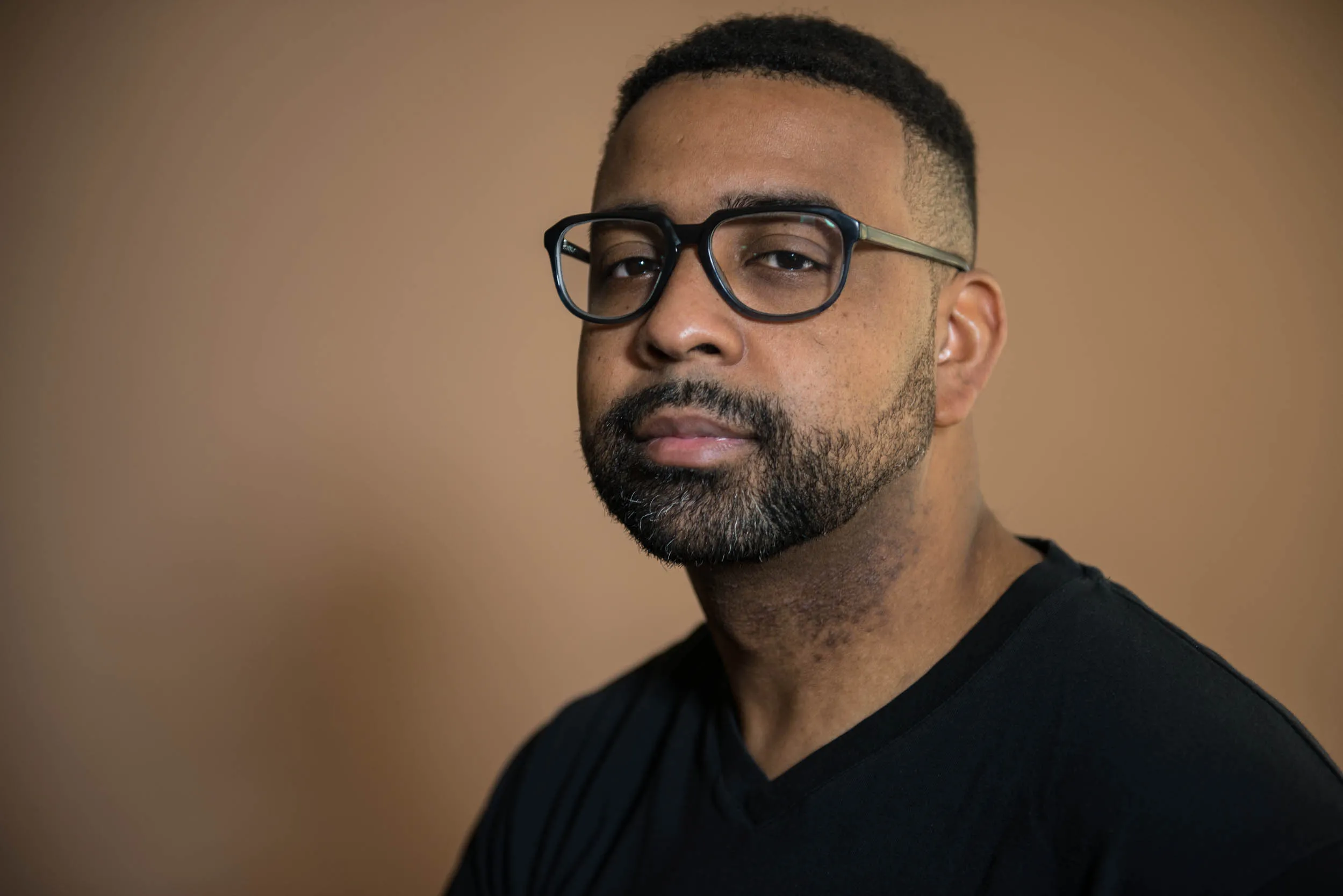
Jon Henry is a visual artist and ICP faculty member working with photography and text, from Queens NY (resides in Brooklyn). His work reflects on family, sociopolitical issues, grief, trauma and healing within the African American community. His work has been published both nationally and internationally and exhibited in numerous galleries including Aperture Foundation, Smack Mellon, and BRIC among others. Known foremost for the cultural activism in his work, his projects include studies of athletes from different sports and their representations.
He was recently named one of The 30 New and Emerging Photographers for 2022, TIME Magazine NEXT100 for 2021. Included in the Inaugural 2021 Silver List. He recently was awarded the Arnold Newman Grant for New Directions in Photographic Portraiture in 2020, an En Foco Fellow, one of LensCulture's Emerging Artists and has also won the Film Photo Prize for Continuing Film Project sponsored by Kodak.