ICP: How has your experience been so far?
Laura Hutson Hunter: The experience so far has been great. Enrolling in the Curatorial Practices in Photography online program with an established institution like ICP made me feel more at ease that it was a good choice. And almost immediately the instructors set the temperature for the class as being strident. Expectations were high, achievable, but high.
These were all really good things which made me feel immediately in the right place, that this was going to be a good opportunity for me to learn more.
The fact that it is online turned out to be one of the biggest advantages and assets of the course because it was putting me in touch with people in different areas, and different geographies. I have colleagues now in Budapest, Venezuela, Norway, New Delhi. It's wild for me to be able to have access to all of their minds, their experiences, and their contemporary events.
ICP: Are there any experiences of the community or the connections that you've built that you can talk about, either through collaboration or similar stand out experiences?
LHH: One of my friends in this cohort is Emese Mucsi and she works at the Robert Capa Center for Photography in Budapest.
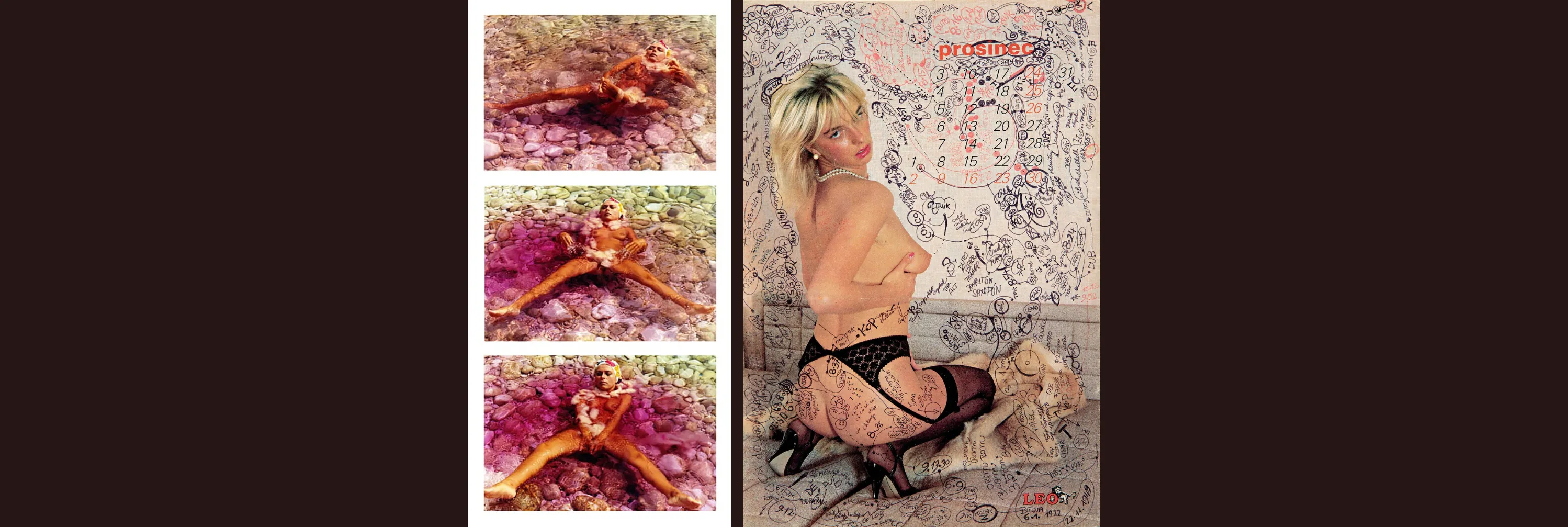
And my class project is about provocative photography and erotic bodies. And she and I had a meeting because she had been one of the curators for their Photo Brute exhibitions. I had been curious about the photo brut artist Zdeněk Košek, and we connected because I'd wanted her to tell me more about him. But she was also able to introduce me to a lot of these really established, very good photographers from Hungary and that Central European area that were unfamiliar to me, like Katalin Ladik. It was really important to bring more of an international perspective to the kinds of photographers I was already familiar with.
Also, one of our colleagues is based in Venezuela and they had the massive earthquake. And we saw how people from all across the globe were able to, you know, check in on her and have a personal relationship with someone who was experiencing that as it was happening.
But in our conversation, she introduced me to other photographers working in other mediums, you know, in social documentary photography and just sort of like expressive self-portraits that I had not been aware of.
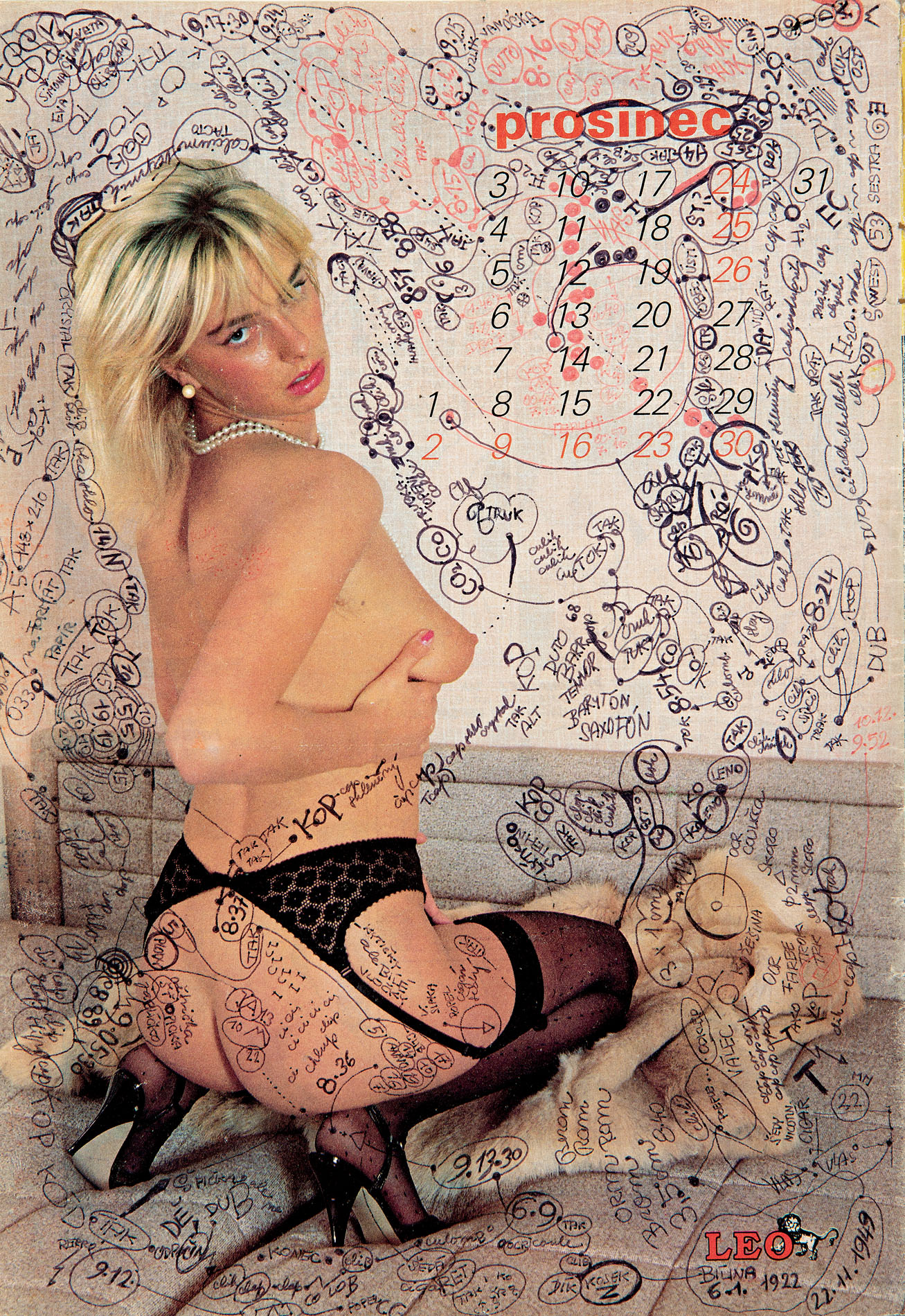
Image credit: Zdeněk Košek
ICP: Tell me a little bit about your work for the class and how the class has helped you move through the project?
LHH: Well, I have had an ongoing curatorial practice that explores sex positivity or sexual themes, provocative themes and in all of contemporary art.
This is the first time that I've really focused on the photography aspect, which has been very exciting to me. And it's allowed me to deepen my thought process around it and my curatorial investigations and interrogations of the history of photography and representation, self-representation in ways that are extremely valuable.
There are so many images of sexualized bodies that to talk about these ideas seriously, you must have the theoretical framework in the background to be able to interrogate the systems.
ICP: Can you tell me a little bit about what themes and inspirations you're pulling into this project?
LHH: I'm working with a few archives. One is with the archival photographs by George Platt Lynes, who was an influential portrait photographer who did a lot of erotic male nudes and nudes.
And then also, you know, pairing them with more contemporary examples of artists who have similar ideas and goals of wanting to examine the increasingly risk-averse art institutions to sexuality and the importance of making work that is unique and individual.
ICP: Is there anything else that you'd like to mention about the class, the folks that you're working with, or your project?
LHH: I've worked for a long time as a reporter and a journalist and an editor out of Nashville, TN and working at an alt weekly is extremely local, localized, hyperlocal. And it's difficult to take the time to have a broader perspective of things.
Now my daily practice is to check in with people about day-to-day life. It's these sorts of small cultural events and perspectives that have made it really exciting.
Laura Hutson Hunter is a writer, editor, and curator based in Nashville. She has curated exhibitions including Nerve: The Female Body in Women’s Art and Futurephilia: Sex and Science Fiction in Contemporary Art, and is currently curating an exhibition of Stacy Kranitz’s photography at NYU’s Gallatin Galleries.
Hunter is the arts editor of Nashville Scene, where she has covered contemporary art and culture for more than a decade. Her writing has appeared in Art in America, VICE, BookPage, and other publications. She co-edited the Frist Art Museum’s catalogue In Her Place: Nashville Artists in the Twenty-First Century, published by Vanderbilt University Press, and contributed the essay “Southern Artists and Their Discontents” to the volume. She is a graduate of NYU and is currently pursuing a certificate in Curatorial Practices in Photography through the International Center of Photography.