ICP: What drew you to take this course at ICP?
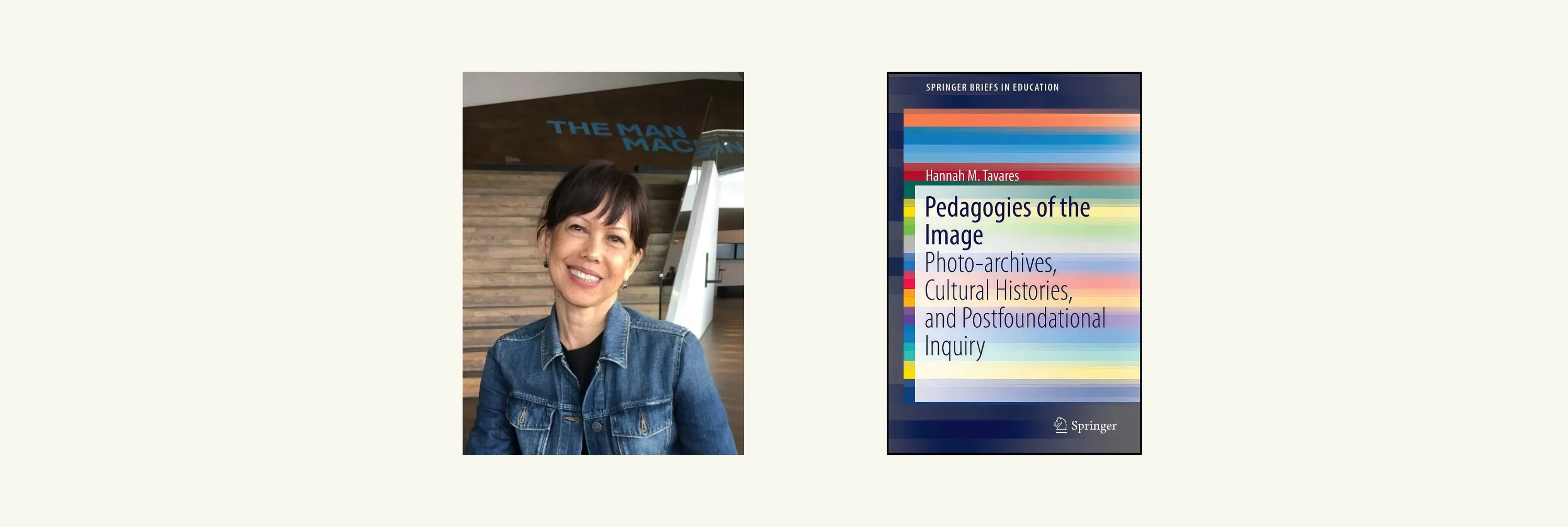
Hannah Tavares: I've taken a few online classes, mainly in New York, and I was feeling stifled with what I was working on. There's this photographer, Caroline Gurrey, who made photographs of Hawaiian children from 1905 through 1909. And I've been working with those photographs for almost six years. I had written about them, but I still was not satisfied with what I wrote and how I was engaging with the images.
I'm a scholar professor based in Honolulu. I teach graduates, PhD, masters, and undergrad students in an education program. I often use films, literature, and images in my courses.
This looked like the perfect program for me, because it would really help push my practice, scholarship and teaching. So, I applied with this project in mind. It certainly exceeded my expectations.
I've been really happy with the rigor of the curriculum. The breadth and expertise of the faculty is so impressive. The salon sessions and mentoring in the summer are all really wonderful.
ICP: How has it been to interact with others in the class?
HT: We are the first cohort of the Writing and the Photographic Image online program. I'm the only practicing academic. A couple of folks are retired academics but are also image-makers; others are practicing photographers. I am not a photographer, so it's been interesting to get the perspective of practitioners.
ICP: Can you tell me a bit more about the mentorship?
HT: I really love the structure of the program. It was very intense in the first half. Then we have the summer to write and work on our projects. Each student is paired with a mentor. I was so excited that Liz Ikiriko was going to be my mentor. I had her book, As We Rise: Photography from the Black Atlantic, it was a really good match for me. The summer is when I really began to focus on writing, I began to see where the writing and the images were going.
Whereas prior to that, it was a bunch of ideas.
What I think helped to facilitate the process was the writing course taught by Sara Knelman. She encouraged experimentation, which is not something I do in my academic writing.
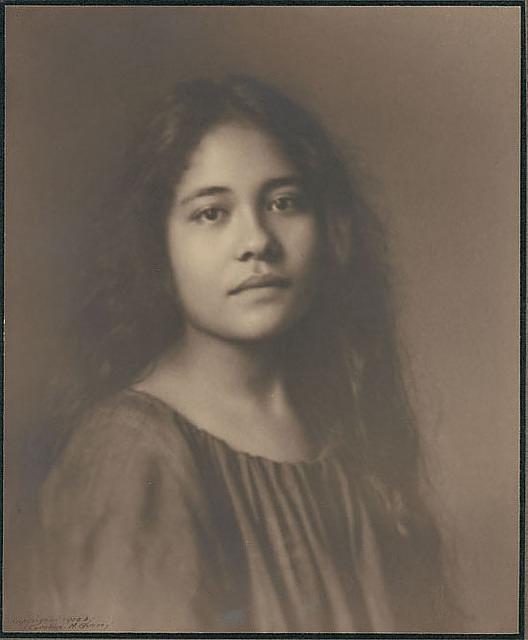
Photo Lot 153, Caroline Haskins Gurrey portraits of Hawaiians, National Anthropological Archives, Smithsonian Institution.
ICP: Have you had a chance to work on the Gurrey Project? And how is it situated in your work with the class?
HT: It's completely different than what I thought it was going to be. The biggest difference for me is the form and then finding the language to enact that form. It is a challenge for me to keep the analytical and affective registers present in the writing.
For example, I would never have thought of writing a piece in its current layout. The text and image relationship, etc. The texture of it is so different from what I have produced. Yet it still encompasses the theoretical/conceptual and historical pieces that are important to me. I'm in academia, so the work that I create must meet a particular kind of scholarly criteria. So, I’m always thinking about that.
The photographs of Hawaiian children were made in 1905 through 1909. My project is really about the images, not about the photographer. I couldn't figure out why I'd been drawn to those images. And being in the program really helped me draw that out and to conceptualize what I was doing. It’s really exciting to feel like something is finally landing.
ICP: Are there ways the program contributing that you're looking forward to in the program or, you know, if there are ways in which it's already transferring over to your teaching practice, things like that?
Yes, I would say my practice has grown in ways that feel both intellectual and deeply practical. To have a deeper understanding about the relationship between language and image, which is flexible and experimental but also logical, and then to see how that relationship is surfacing in my work with more intentionality and greater curiosity.
I was able to build an archive of resources from the classes, the salon sessions, recommendations from my mentor, and all the resources that have been shared. I've got this amazing archive to draw from, not just for my own writing and scholarship, but also for my teaching practice. Things that translate to my teaching practice are not just content readings, films, artists, photographers, but the different ways of seeing and engaging with photography and writing.
The essay that I am working on is on the afterlife of images and deals with affect, time, pedagogy, and sticky entanglements. So, to answer your question, yes, it does have a bearing on my scholarly as well as my teaching practice. Besides, I never see them separately.
---
Hannah Maria Tavares is an Associate Professor in the Department of Educational Foundations at the University of Hawaiʻi at Mānoa, a graduate studies program in the College of Education. She teaches both undergraduate and graduate courses and supervises master and doctoral students on the completion of their theses. She is co-editor of the Routledge international book series, Flashpoint Epistemology and is currently preparing an essay for publication titled, On the Afterlife of Images: Affect, Time, and Sticky Entanglements on the 1905-1909 portrait photographs of Hawaiian children created by the photographer Caroline Gurrey.
Her humanities-oriented scholarship lies within the interdisciplinary field of the social foundations of education, which examines the social, cultural, historical, and philosophical questions that shape the “why” of education and its relationship to the various publics it serves. In contrast to research and scholarship focused primarily on technical methods of predictable outcomes, her work foregrounds the interpretive, ethical, and contextual dimensions of educational life. She approaches teaching as an inquiry-driven relational practice in which knowledge emerges through processes of reading/analysis, dialogue, and reflection. She prioritizes slow-reading, attentive listening, critical questioning, and creativity. These practices support students’ educational journeys while recognizing that what we know and can know is always partial and situated and that knowledge is never value-free.