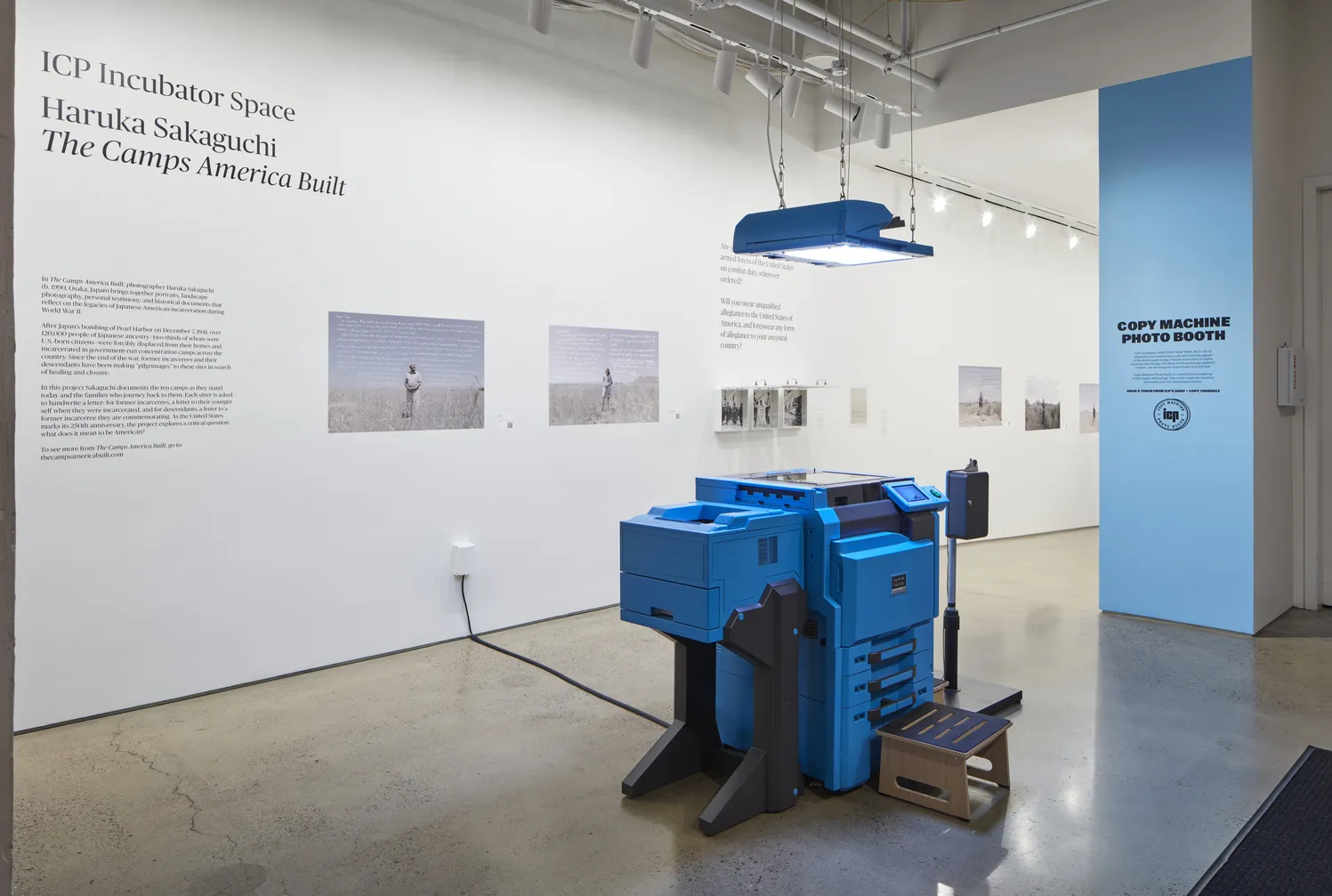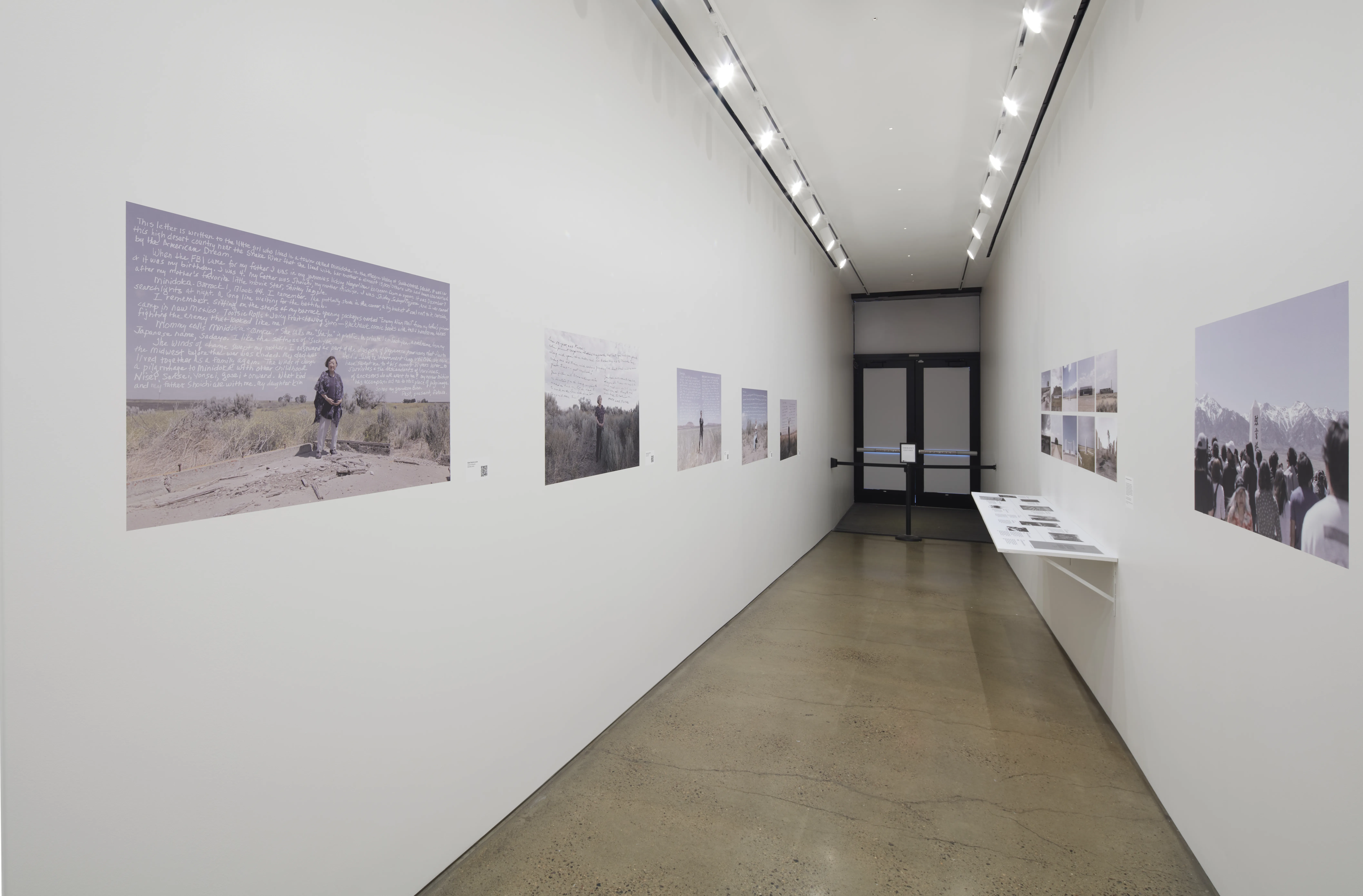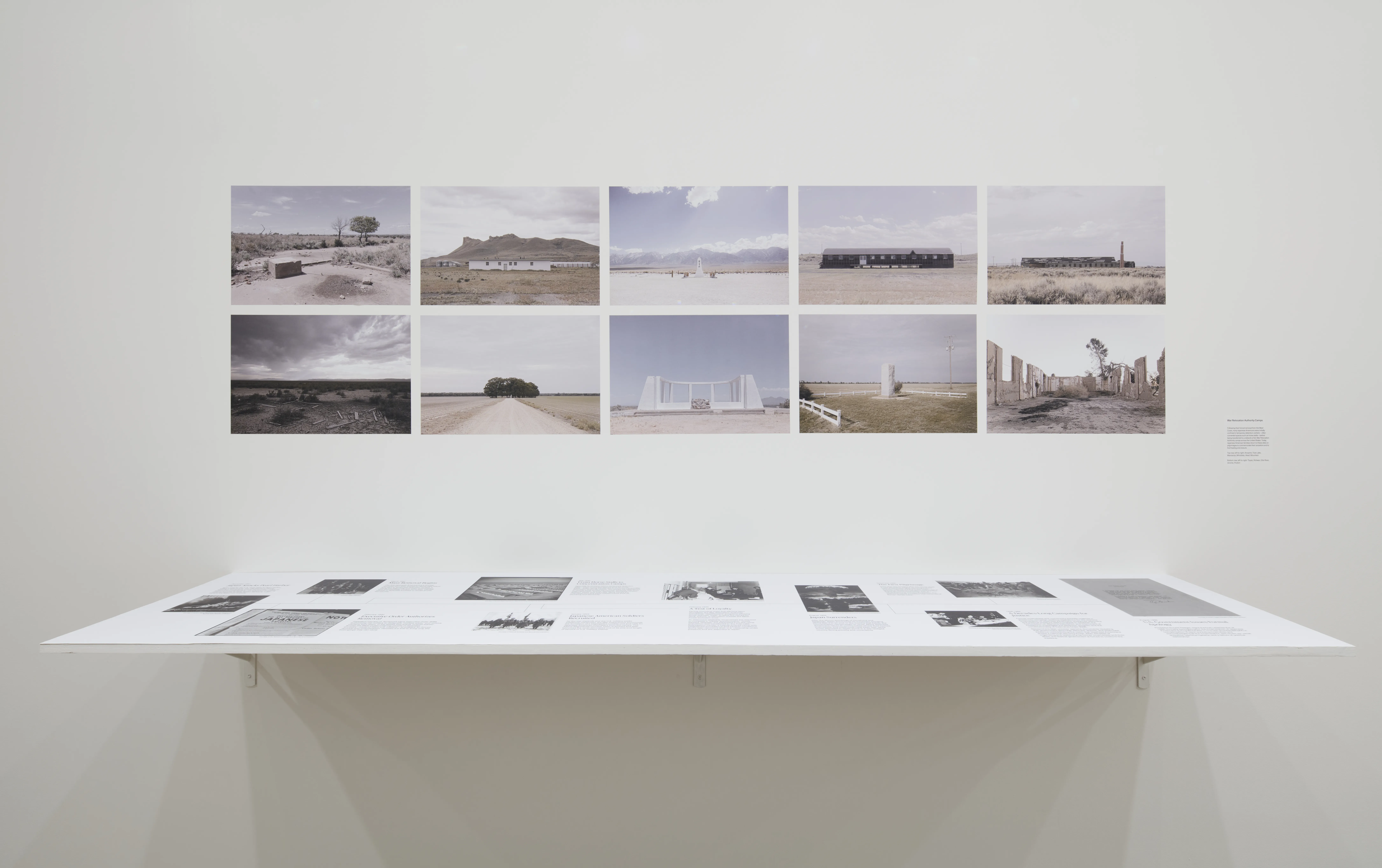

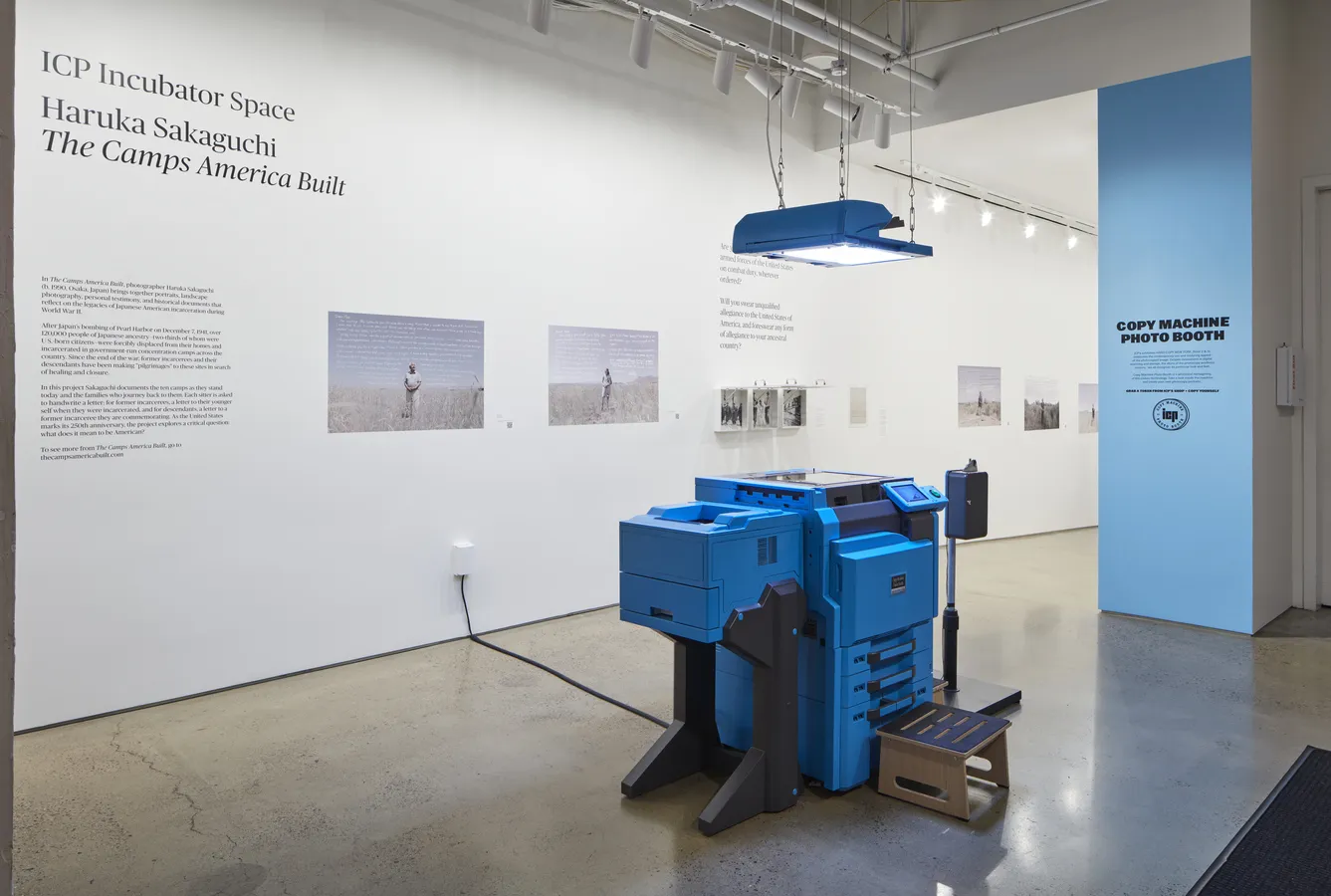
In The Camps America Built, photographer Haruka Sakaguchi traces the afterlives of Japanese-American incarceration during World War II, through intergenerational dialogue, pilgrimage, and personal testimony. After Japan’s bombing of Pearl Harbor on December 7, 1941, over 120,000 people of Japanese ancestry—two-thirds of whom were U.S.-born citizens—were forcibly displaced from their homes and incarcerated in government-run concentration camps across the country. Since the end of the war, former incarcerees and their descendants have been making "pilgrimages" to these sites in search of healing and closure.
In this project, which was inspired by a journalistic assignment, Sakaguchi documents the ten camps as they stand today and the families who journey back to them. The project evolved into a deeply personal inquiry into memory, allegiance, and what it means to belong in America. Here is an original interview with the artist:
ICP: Where did the earliest seeds of this project begin?
Haruka Sakaguchi: It actually started with an assignment that I had a chance to work on in 2021… around the Atlanta spa shootings, and how Asian Americans were redefining belonging amidst a surge in anti-Asian racism. One of the families I was supposed to interview withdrew the day before, and this was one of the first times that this had happened. I kind of took it personally.
But I later learned that this family was what’s called a ‘no-no’ family and feared troubling family members for speaking out about belonging on a national publication.
This was the first time I had heard that term, and the first time I learned there was a loyalty questionnaire administered throughout the camps. ‘No-no' families were those that answered ‘no’ to the loyalty questions. It was also the first time I got a glimpse of the kind of moral and existential dilemmas Japanese-Americans were dealing with during the war.
ICP: How did that moment evolve into the project we see now?
HS: I figured, if someone like myself—with a shared heritage—isn’t familiar with this history, there are probably many more people out there who have never heard of it. I was fortunate enough to speak with Kimiko Marr, a descendant of the camps who runs Japanese American Memorial Pilgrimages, a nonprofit that hosts and facilitates pilgrimages, taking families to the camps at present.
I was really drawn to this idea of pilgrimage—not as a return to a sacred place, but as a return to a site of trauma. Hearing that this was happening in the context of incarceration, I thought: this was a unique and culturally specific angle on this history.
“I was really drawn to this idea of pilgrimage—not as a return to a sacred place, but as a return to a site of trauma.”
ICP: What did you encounter when you began working with the families?
HS: With the first family I photographed, the daughter had convinced her father to come, but he had spent the majority of his life trying to forget that he comes from this lineage. I remember meeting them in a parking lot—she greeted me with a huge smile, and her father was sitting on the curb, facing away. He looked tense. She told me, ‘He still doesn’t understand why we’re visiting the camp.’
That really speaks to one of the most significant things I learned—that there was a real cultural unmooring that took place after the war.
ICP: How do you see “cultural unmooring” playing out in this context?
HS: Those who were incarcerated were targeted because of their heritage, their language, or their cultural practices. So they were very disincentivized from passing those things down. There’s something called the ‘Sansei effect,’ where third-generation Japanese-Americans felt immense pressure not just to be American, but to out-American their peers.
That meant academic success and career success, but also very visible markers— class valedictorian, prom king or homecoming queen, being the ‘main character’ in the American narrative. And that also meant distancing from Japanese language and culture, even names. It wasn’t until the fourth or fifth generation that you see a resurgence, where younger Japanese-Americans are really interested in reclaiming their history.
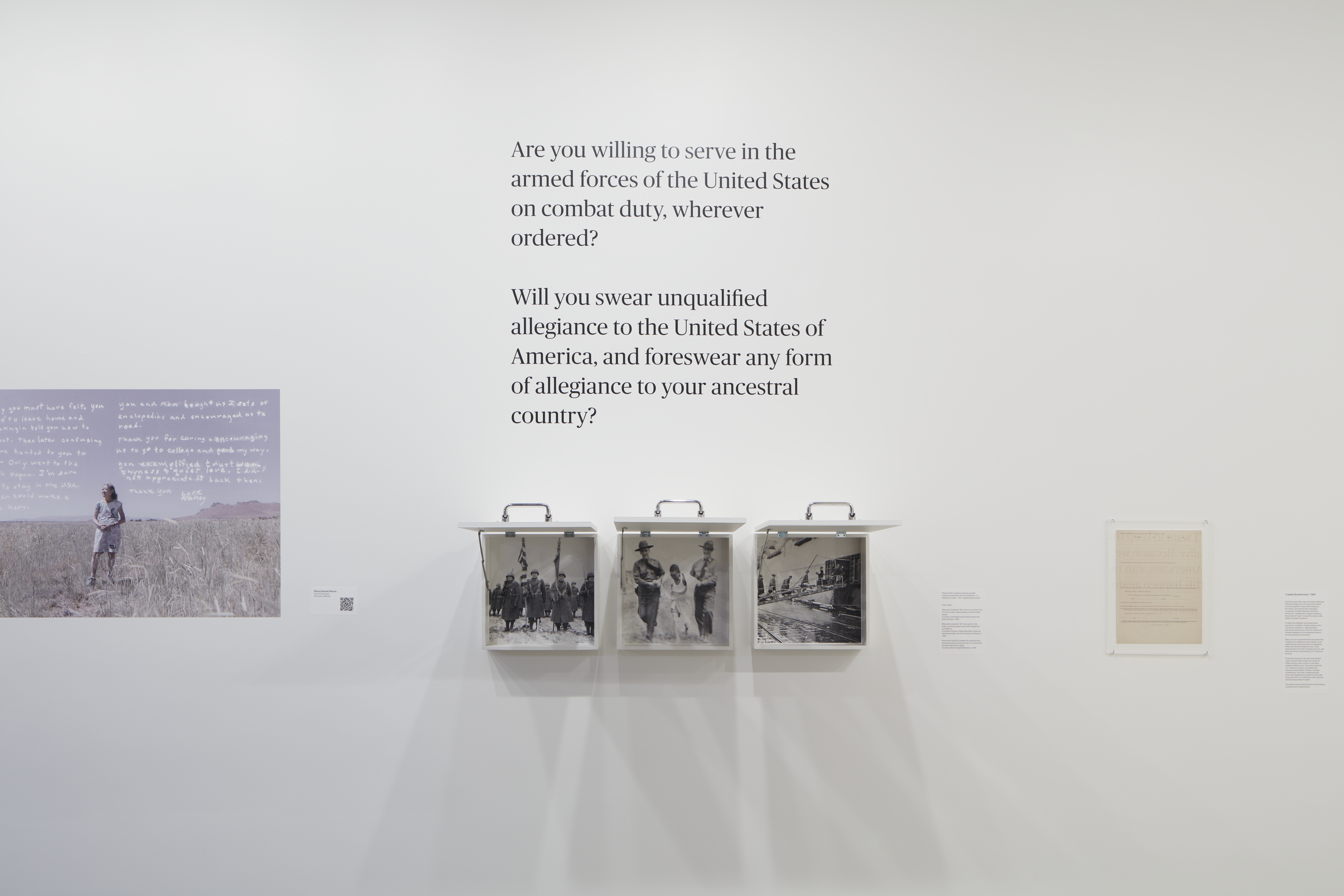
The loyalty questionnaire was filled out by those incarcerated to test their allegiance based on these questions questions. Image credit: Tim Gersten
ICP: Speaking of identity and the resurgence of interest in the Japanese-American identity, how did your own identity shape the project?
HS: I think this is a shared experience amongst many immigrants. We’re constantly negotiating what our cultural allegiances are to our ancestral countries versus where we call home now. The loyalty questionnaire felt like a very tangible form of that, something many immigrants grapple with, but materialized in this bureaucratic form with real-world consequences.
When my parents decided during the pandemic that they were moving back to Japan, that was a huge shift for me. It made me think seriously about what it would mean to return to be a caregiver to my parents. That experience really shaped how I navigate life here—it made me very sensitive to this idea of loyalty and allegiance.
ICP: Did you see parallels between this history and the present moment?
HS: Oh, absolutely. I learned about Tsuru for Solidarity, which organizes actions at former incarceration sites that are now being used to detain migrant families. There’s an undeniable repetition of history.
The history of Japanese-American incarceration is often presented as an isolated incident, when in fact it is part of a broader, recurring pattern of mass incarceration in the United States.
“The history of Japanese-American incarceration is often presented as an isolated incident, when in fact it is part of a broader, recurring pattern of mass incarceration in the United States.”
ICP: Your work often involves collaboration and co-authorship. How did that develop in your practice?
HS: I felt this most acutely when I was working on a project with atomic bomb survivors. I felt very uneasy about making portraits and then just leaving. I could feel the weight of what I was asking them to do. These were long, emotionally difficult conversations, and all I could say was, ‘I want to share your story with an English-speaking audience,’ because it was a project which was developing independently at the time. It just didn’t feel right.
So, I started thinking about how to incorporate their voice—not just visually, but in a way that allowed them to take a stance. In this project, instead of having individuals write separate letters, I thought it would be more compelling to have family members speak to each other.
ICP: What does handwriting and annotation unlock in your work?
HS: In Japan, there’s an emphasis on calligraphy from a very young age. It’s said that one’s penmanship says more about their character than how they speak or present themselves. I’ve always seen handwriting as a very revealing form of expression, even vulnerability.
In my work, it became a way to invite the individual to leave their imprint on the image. A way to be part of the process. There’s a lot of power that photographers have in shaping someone’s narrative, and I'd take any opportunity to counter that imbalance.
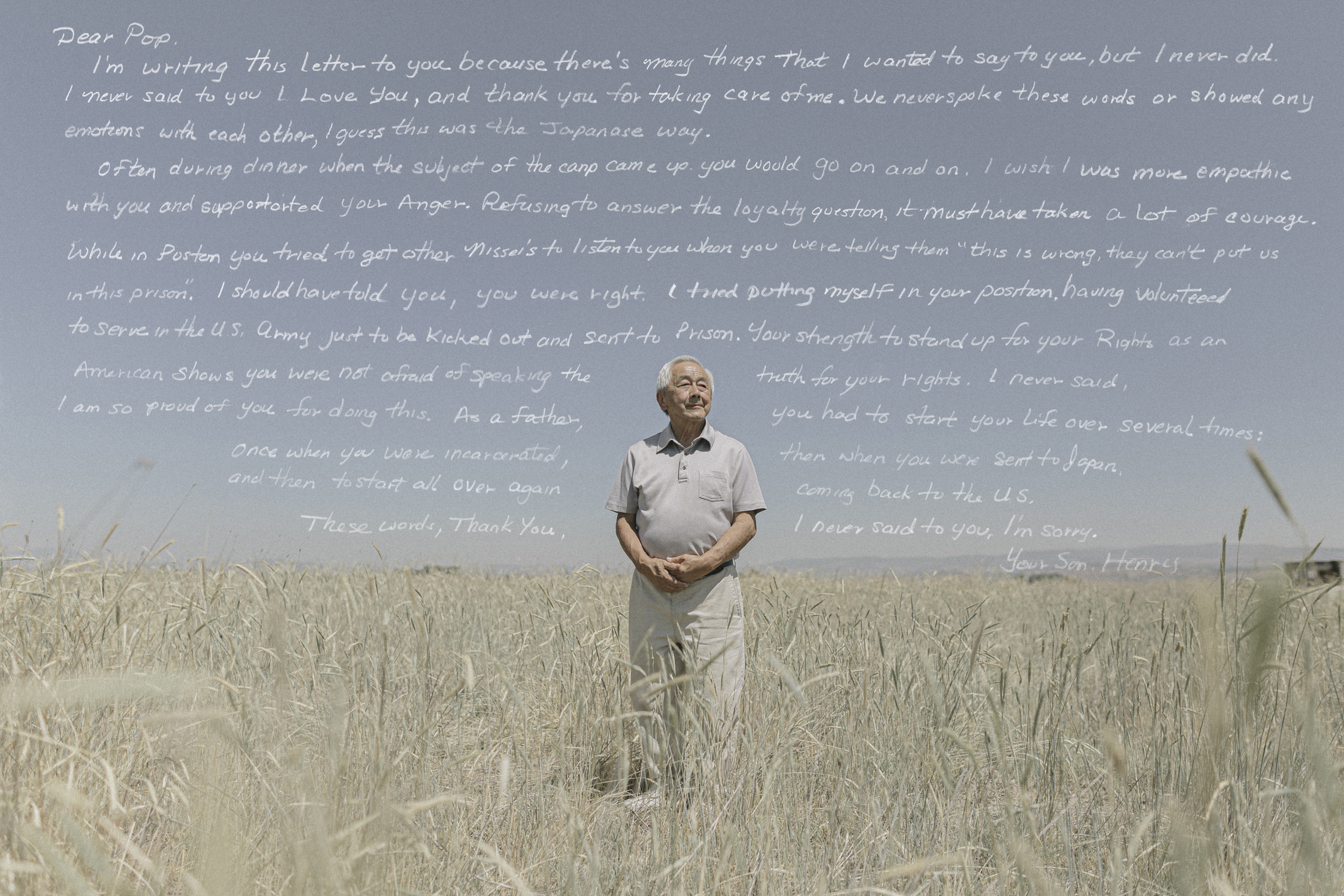
Haruka Sakaguchi, Henry Kaku, Descendant, Tule Lake, California © Haruka Sakaguchi
ICP: What surprised you most while making this work?
HS: This work really reinforced for me what might look like assimilation was actually a form of generational protection. For many families who survived the camps, giving their children an Anglicized name or encouraging them to speak without an accent wasn’t just about success or social status. It was about safety.
That was something that took me a long time to understand, and I could see that realization unfolding during these pilgrimages.
ICP: What visual or conceptual references shaped the project?
HS: I would be remiss not to mention Jim Goldberg. His work really revealed the narrative potential of photography to me. For this project, I was also thinking about 19th-century frontier paintings, these expansive depictions of the American landscape.
I wanted viewers to step into that scale—and then realize they’re looking at a former concentration camp. To feel that tension between the beauty of the landscape and what happened there.
ICP: How did that translate into the exhibition?
HS: There’s a 24-foot panoramic of Manzanar at the entrance and seeing it installed brought me back to this sense of unbridled curiosity I had when I first started making photographs. It reminded me that photography isn’t just about visual testimony. It can transport someone to a place they may never encounter.
To know that there’s this massive image of a former concentration camp—one our nation would rather us forget—occupying space in New York City feels meaningful.
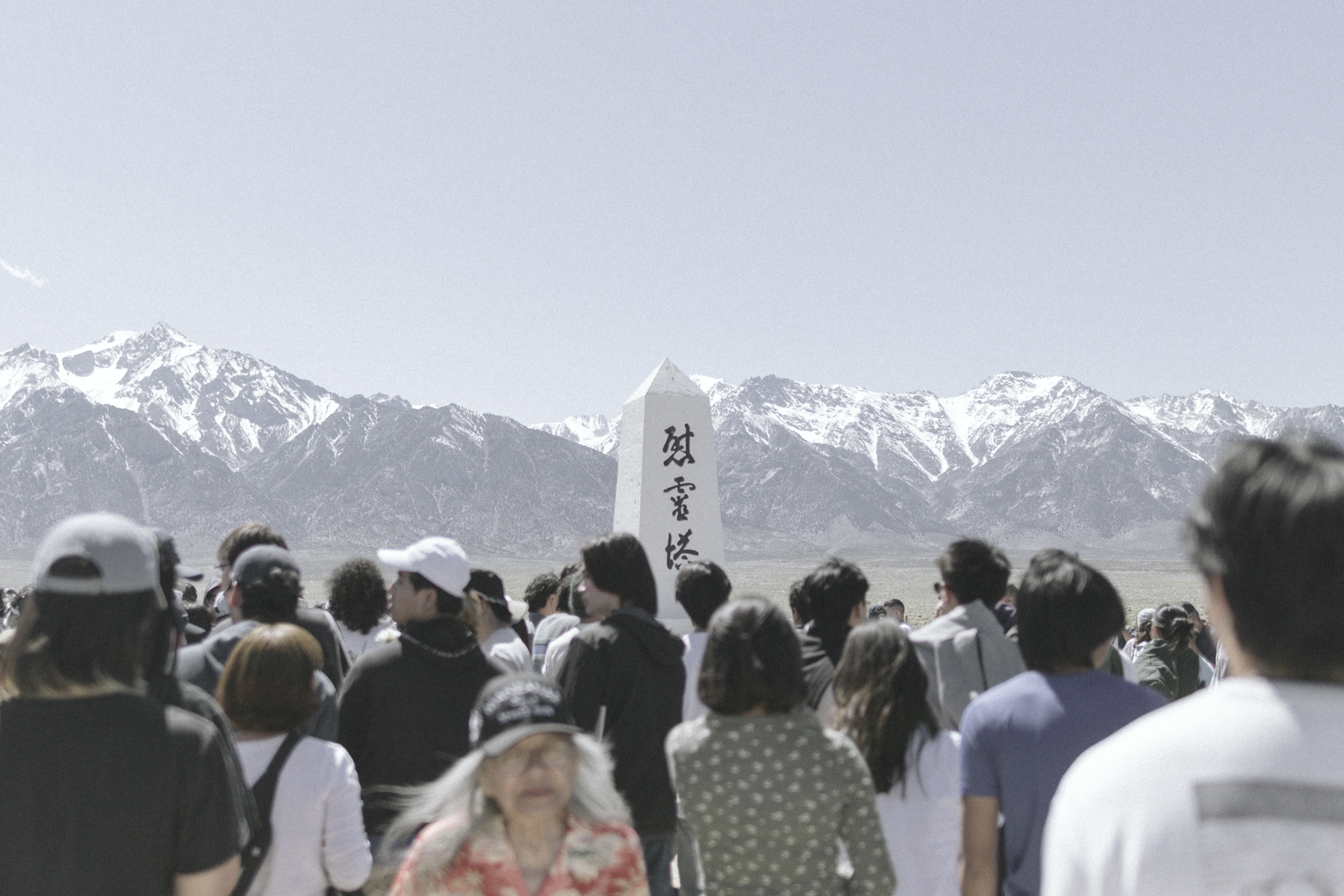
Haruka Sakaguchi, Manzanar, 2022 © Haruka Sakaguchi
ICP: What do you hope audiences take away from the work?
HS: I think this history is often framed as a closed chapter. A moment of wartime hysteria that we’ve already learned from. I really wanted to push against that.
By photographing these sites in the present, and focusing on what’s happening within families today, I wanted to show that this history is ongoing. And to break past this public indifference, this idea that it’s something behind us.
ICP: What’s next for you?
HS: I’ve spent the last few years grounding myself in the United States, trying to understand what it means to be Japanese-American. With my parents moving back to Japan, I’m now thinking about spending more time there—not just as a visitor, but as a photographer and journalist.
After spending the majority of my life here in the United States, I'd be curious to explore what belonging means for me there.