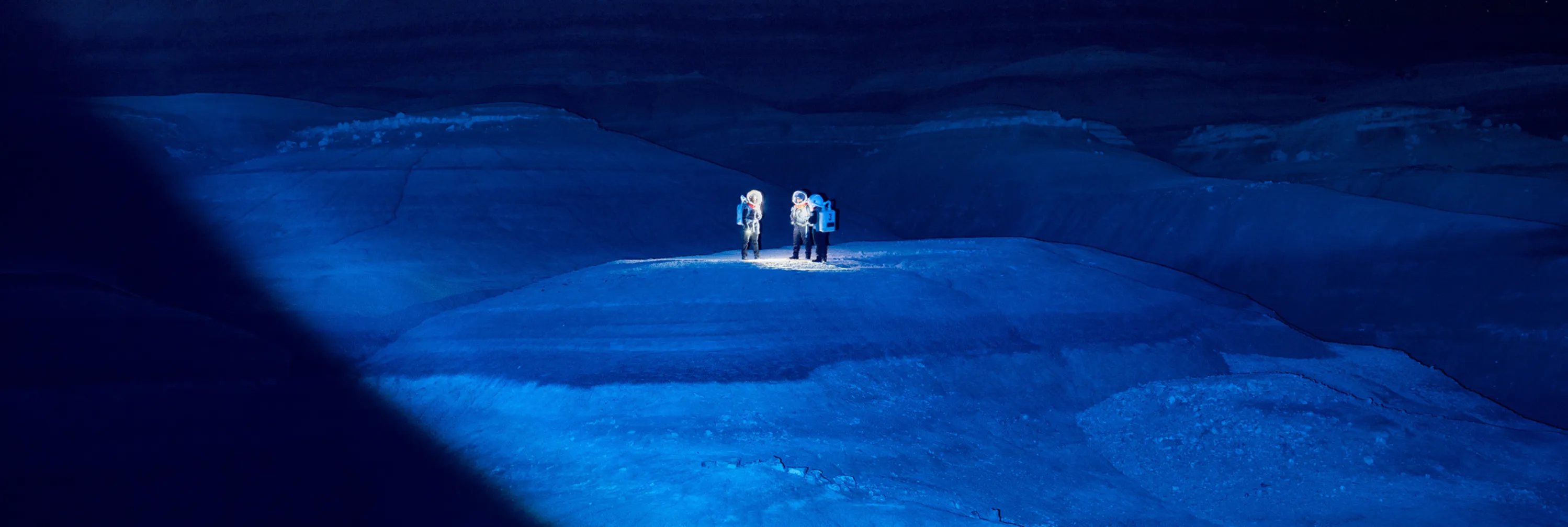
"Pretty quickly Earth faded away", says Mackenzie Calle, photojournalist and National Geographic Explorer. “And that’s an incredible and scary feeling.” Calle is describing her experience as a crew member at the Mars Desert Research Station. The station is part of a larger project: World’s Biggest Analog (WBA).
WBA is the largest space simulation ever conducted, testing how humans could live across the solar system on celestial bodies like Mars and the Moon. In October 2025, over 60 participating analog astronauts across 16 habitats in 13 countries ran a two-week simulation in tandem.
Calle was embedded as the Crew Journalist and GreenHab officer, one of four crew members in southern Utah, understanding what life on Mars could look like. This entailed a year of training and selection, following a protocol that crew members have to complete. Calle and the rest of the crew would meet online, once or twice a week, to build a level of familiarity and discuss logistics and mission goals, so they could work efficiently as a team. Six months before the mission, things kicked into a higher gear, and they were given their crew assignments.
Once they had completed on-the-ground training with the rest of the station crew, the team was "on Mars," for all intents and purposes. In this high-pressure space simulation, Calle emphasizes the importance of relationships with her crewmates. In turn, this revealed her need for trusted collaborators outside the Analog to help her document the story in its entirety.
When the crew were often sleeping only 5 hours a night, Calle could trust that Cameron Peters, Photo Editor at National Geographic, and fellow ICP Documentary Practice and Visual Journalism alum ('22), was providing guidance from a shared place of understanding and visual taste. “I had the utmost faith in everything she said and really took that to heart,” says Calle.
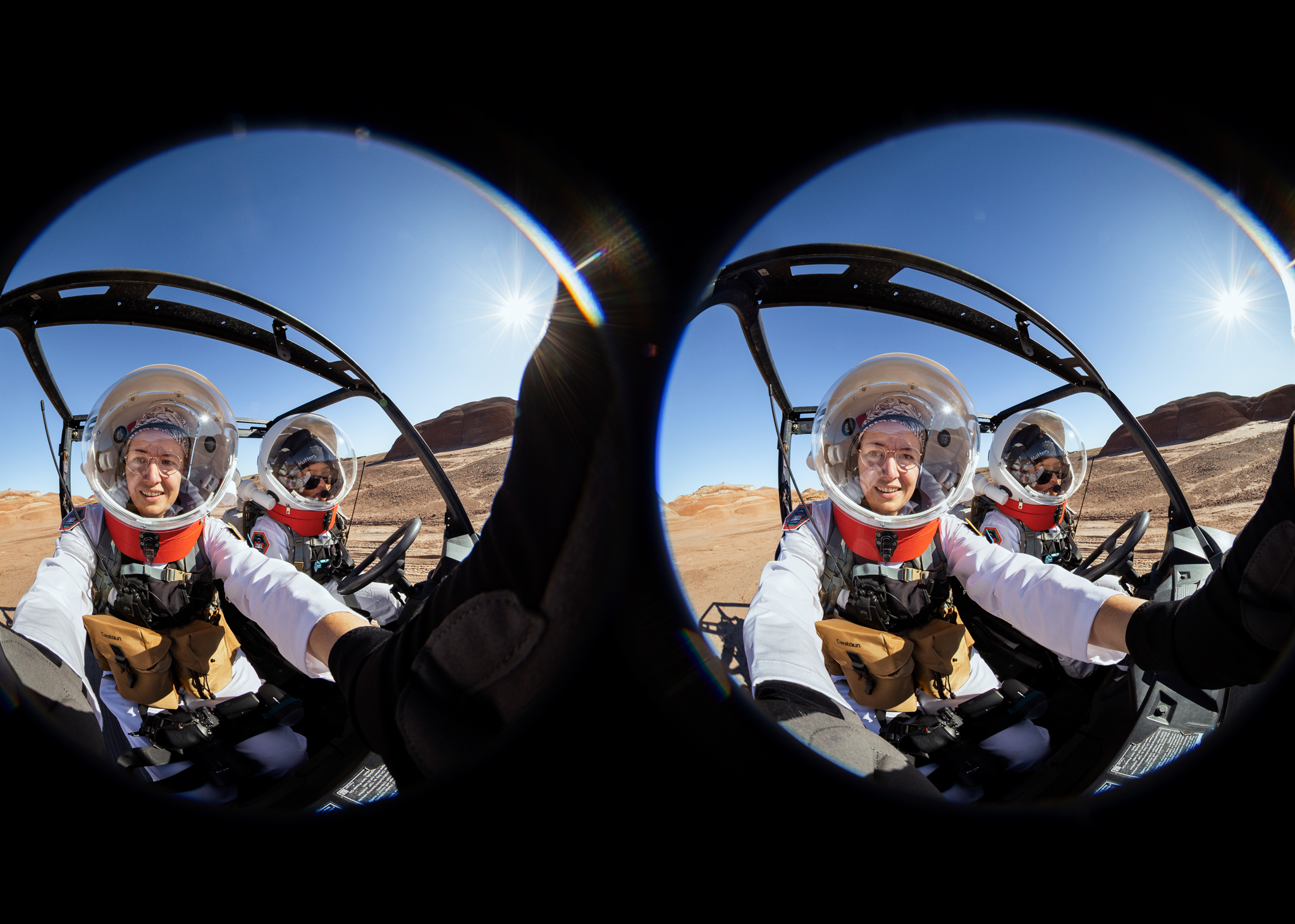 Image credit: Mackenzie Calle
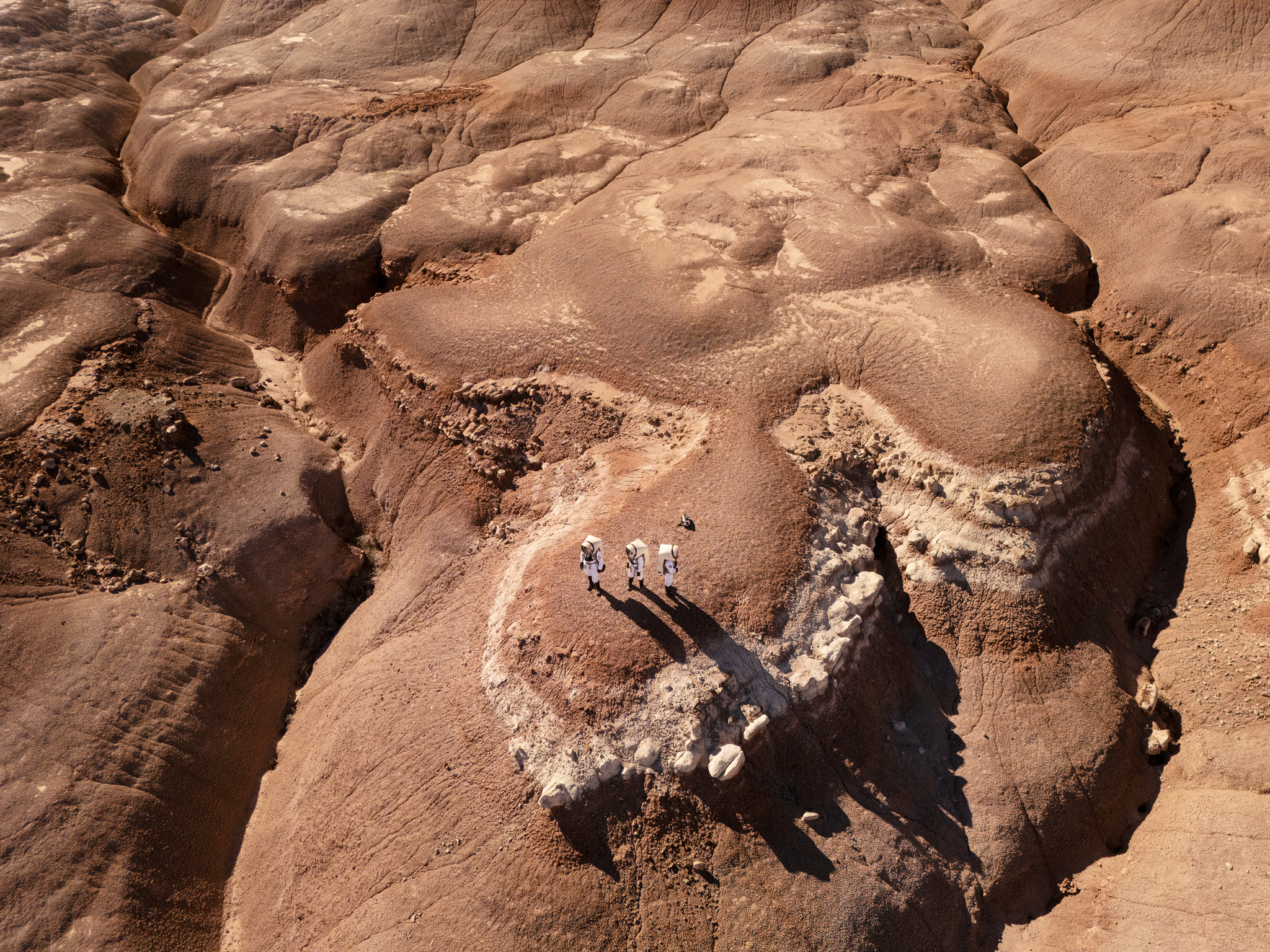 Image credit: Mackenzie Calle
“As an editor, I want to help set Mackenzie up for success in the field, to do what she needs to do, which is bring her unique eye to the story,” remarks Peters. She sees her role as a partner in raising questions that will help expand and deepen the narrative, as well as being a voice and advocate for how stories can exist at National Geographic.
The role of a photo editor at National Geographic is to envision how photos can exist across digital and print platforms and in the world to the National Geographic audience. For World’s Biggest Analog, Peters and the Story Team collaborated to create a larger interactive piece titled This Isn’t Outer Space — Yet. As well as the print cover story of the July 2026 edition of National Geographic titled Beyond Earth: How We’re Preparing to Live and Work on the Moon and Mars.
Additionally, Peters was tasked with melding stories and visual languages by two photographers—Calle on "Mars" in Utah, and Cassandra Klos on "the Moon" in Poland. Although both projects documented stories in and about space, they brought different perspectives and skill sets to the project.
“This was a key moment when the story started to expand, and the narrative cracked open. We now had two photographers in geographically unique positions to start capturing the global nature of this project,” recounts Peters.
Reflecting on their working relationship, Calle grins as she says, “I think there were one or two moments where Cameron would give me feedback, and it almost felt like a sister because it was hard to listen in such a stressful environment. But I was reading it and realizing, ‘Darn, she’s so right! I know that everything she's saying is correct and I need to integrate this. Even if it’s going to be challenging within the dynamic and confines of the Analog’.”
Peters laughs too and wonders how her feedback was landing over email. During the two-week assignment, communication was placed on a 48-minute time delay to simulate Mars conditions. Under these conditions, it became even more important to step back and assess the developing flow of the story. “It’s that commitment to collaboration and thinking through how we are telling the story in the most visually compelling way,” Peters added.
In the beginning, Calle says she was drawn to landscapes and surreal imagery. Then a pivotal moment was when she shifted her perspective slightly—with the help of Peters’s feedback—to include more of the crew and their quieter moments.
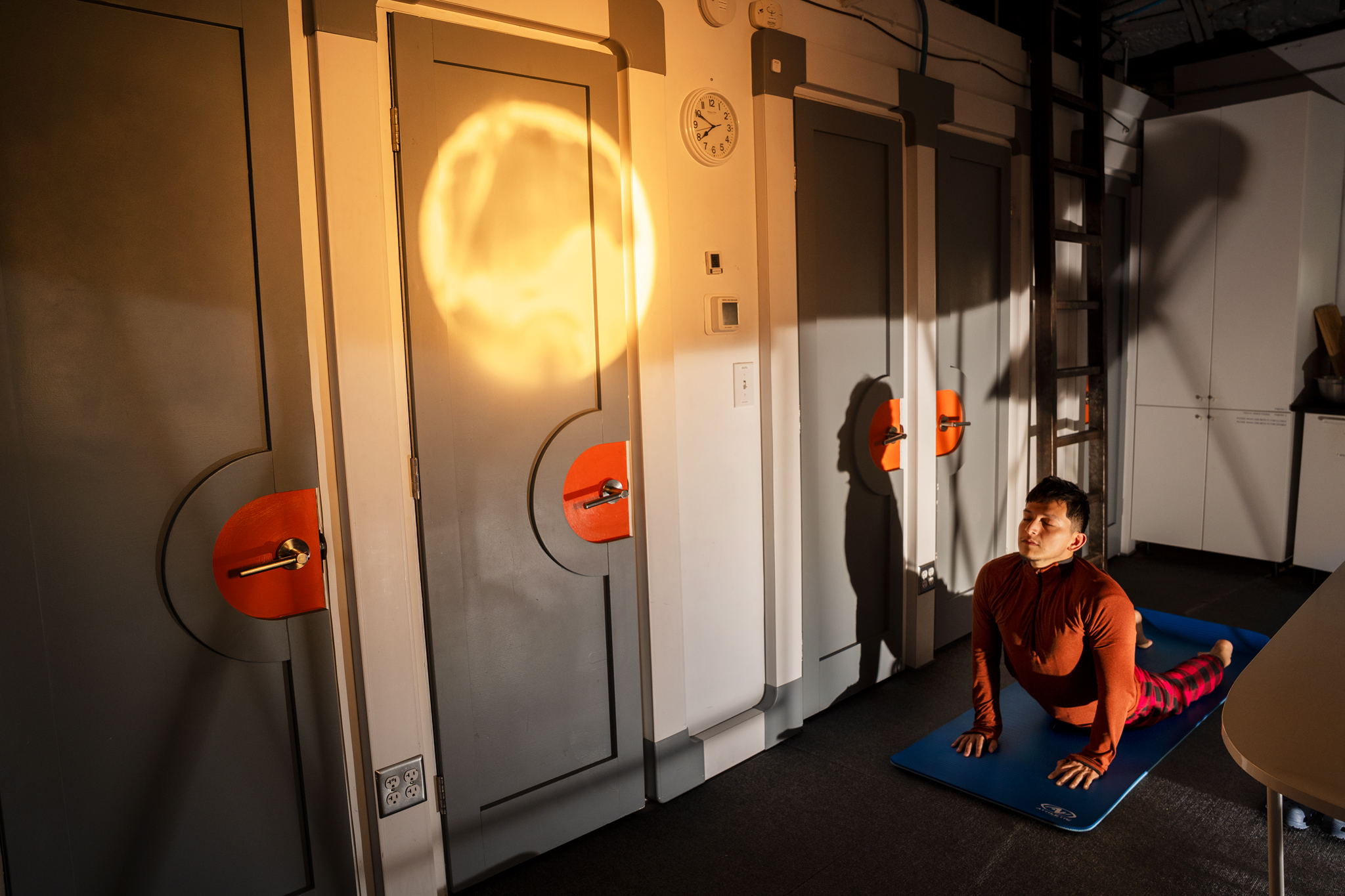
Image credit: Mackenzie Calle
While Calle was immersed in the intensity of the assignment and the challenging conditions, Peters had to zoom out to look at the big picture, assessing missing pieces and offering critical feedback in a timely way. These key check-ins became crucial to the story.
The pair agreed that it would not have been the same without this level of engaged collaboration. “To have someone outside who could really be a partner that I just blindly trust made a huge difference. Also to have fun in those more challenging moments,” remarks Calle.
From ICP to Mars
At National Geographic, Peters is typically working on a few different stories at the same time. “It’s energizing to dive deeply into these stories. It gets me asking different questions and thinking across different disciplines,” she said.
Some elements of this working style take her back to her time at ICP. In addition to technical skills, the course gave them both a shared visual language and background in photography and making photographs. “It started an intensive journey into documentary photography and visual journalism. It's being exposed to all of the possibilities within photography and then finding the world that I was most drawn to,” said Peters.
Alice Gabriner, Elizabeth Krist, and Fred Ritchin's classes at ICP were most influential for Peters, in terms of thinking about how to tell stories in different ways. While long-standing space enthusiast Calle resonated with Debi Cornwall’s Necessary Fictions for her practice.
WBA, and the partnership between Calle and Peters is evocative of a visual storytelling wave of thinking more critically about the future of space exploration. And in creating more diverse narratives of space missions, stories like WBA stand to expand the global view on how different space research can look.
Calle said: “It really is this expansive look, and I think what was so incredible about this project was it brought together people from all over the world, with analogs in 13 different countries.” The photographer, who has been a long-standing space enthusiast,
Although they are both trained as producers and photographers, when given the choice Peters and Calle would not swap roles.